Vixen | A leading manufacturer of astronomical telescopes and binoculars
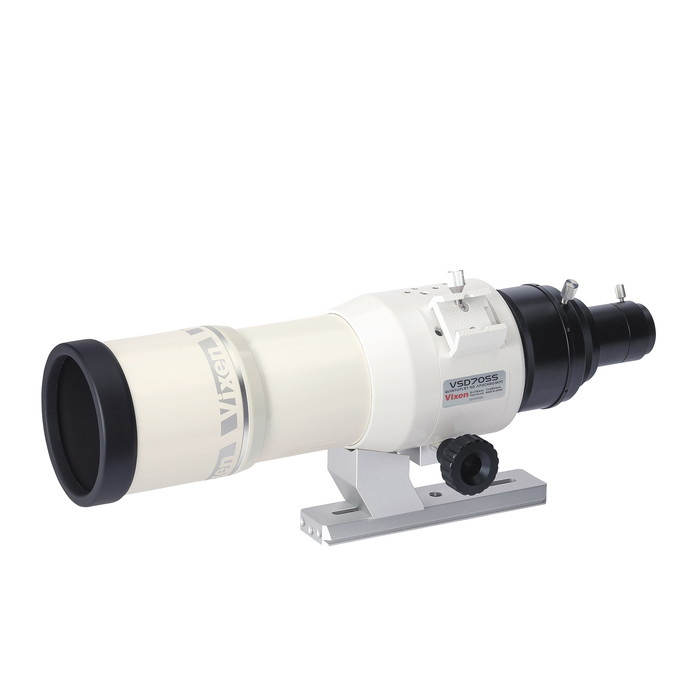
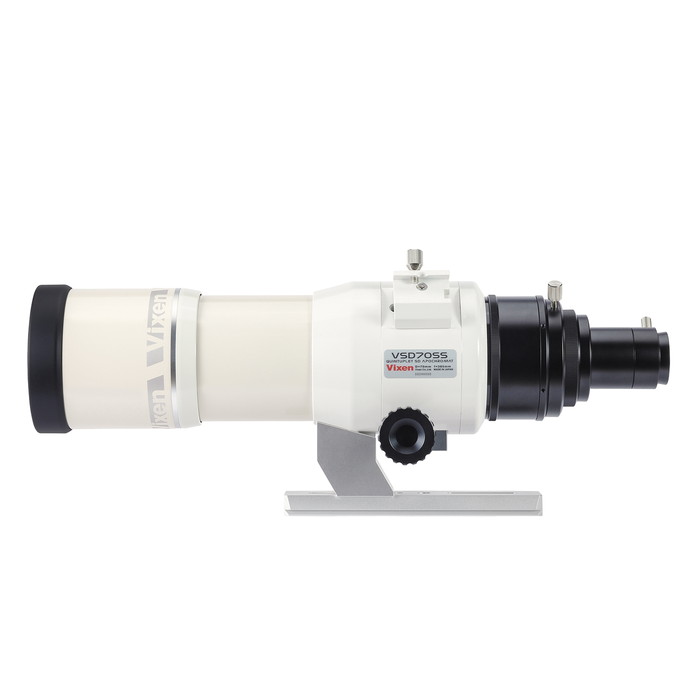
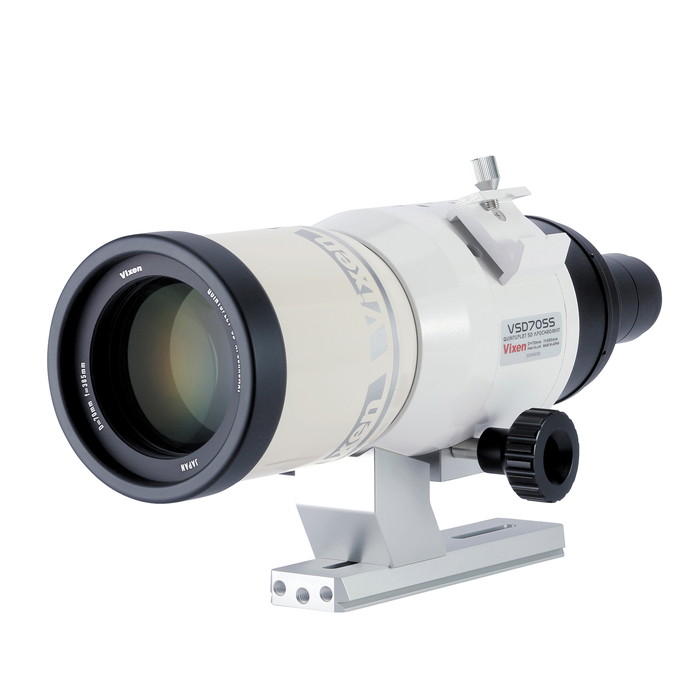
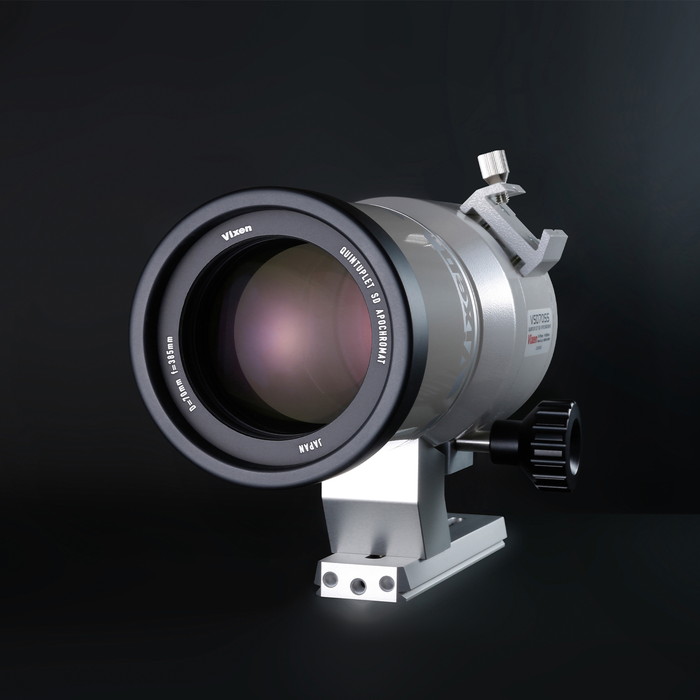
Vixen Telescope VSD70SS Optical Tube Assembly
loading
Suggested retail price: Contact local dealer
A very compact model that inherits the outstanding performance and ease of use of the flagship VSD90SS.
Its premium five-group, five-element optical design, incorporating two SD lenses and one ED lens, delivers an optical system that is virtually free of aberrations. It produces sharp, beautiful, and consistently uniform star images from the center of the image field to the very edge, even when used with a 35 mm full-frame sensor or a larger 44 × 33 mm format camera.
Designed for both visual observation and astrophotography, this photo-visual telescope delivers exceptional performance across a wide range of applications, from wide-field stargazing to high-magnification planetary observation.
Vixen Telescope VSD70SS Optical Tube Assembly Description
-
Engineered to consistently produce sharp, beautiful star images
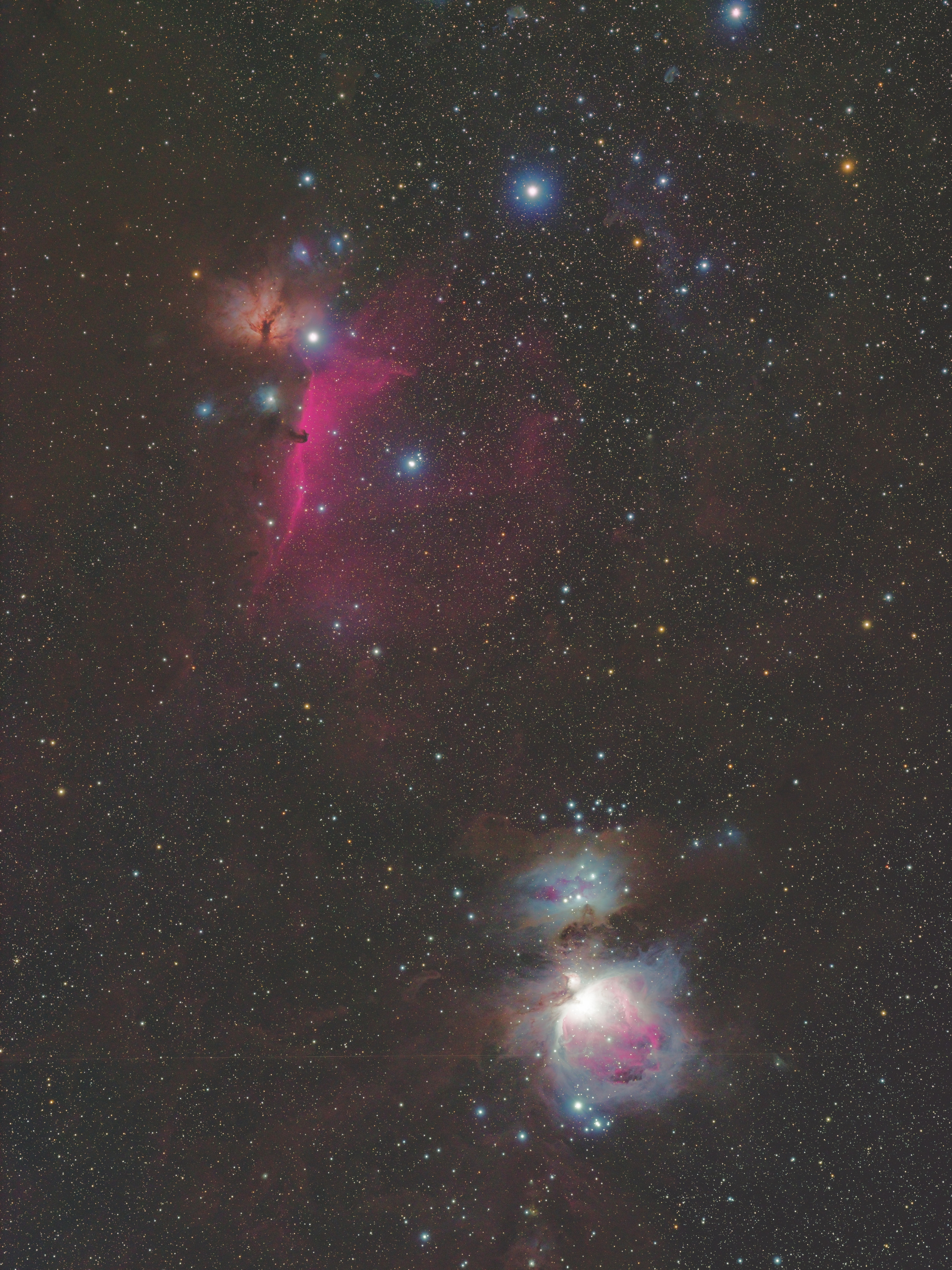
VSD70SS 385mm F5.5
PENTAX 645Z large format image field, total exposure time 60 minutes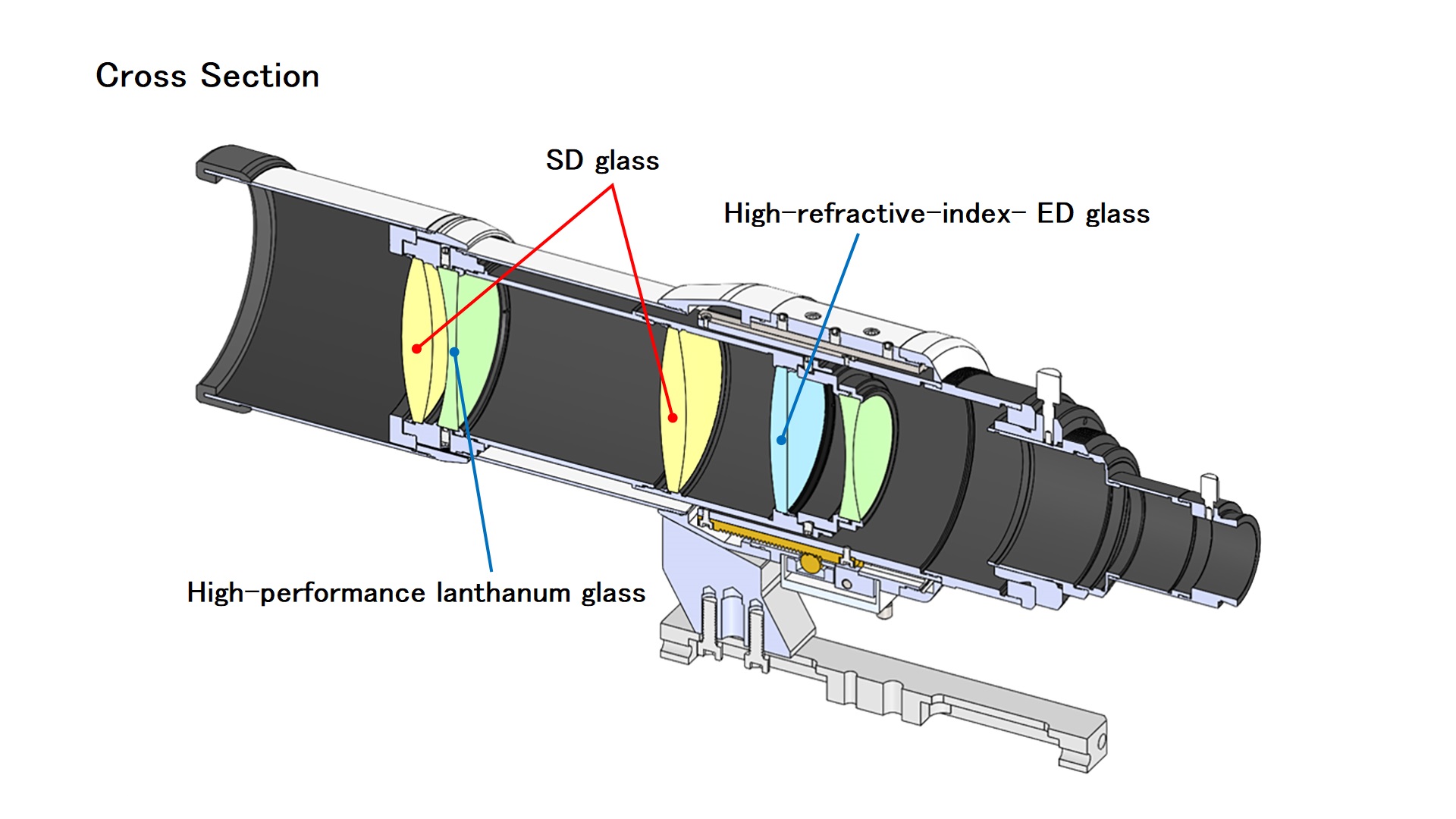
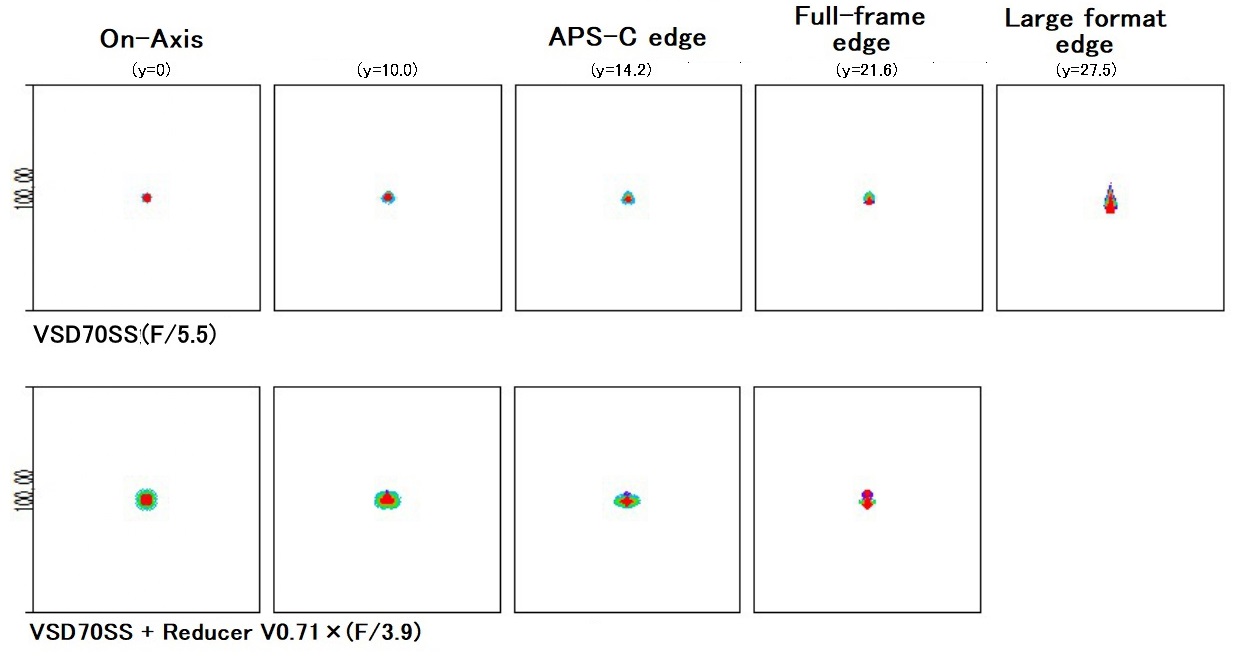
The front convex lens group incorporates two SD lenses and one high-refractive-index ED lens in a five-group, five-element optical design, while the rear concave lens group features newly developed high-performance lanthanum glass. This advanced optical configuration minimizes axial chromatic aberration and astigmatism, delivering exceptionally sharp, beautifully defined, and uniform star images from the center of the image field to the very edge, even when used with a 35 mm full-frame sensor or a larger 44 × 33 mm format sensor.
*When the optional focal reducer is used, the illuminated image field is optimized for a 36 × 24 mm full-frame sensor. -
Engineered to consistently produce sharp, beautiful star images
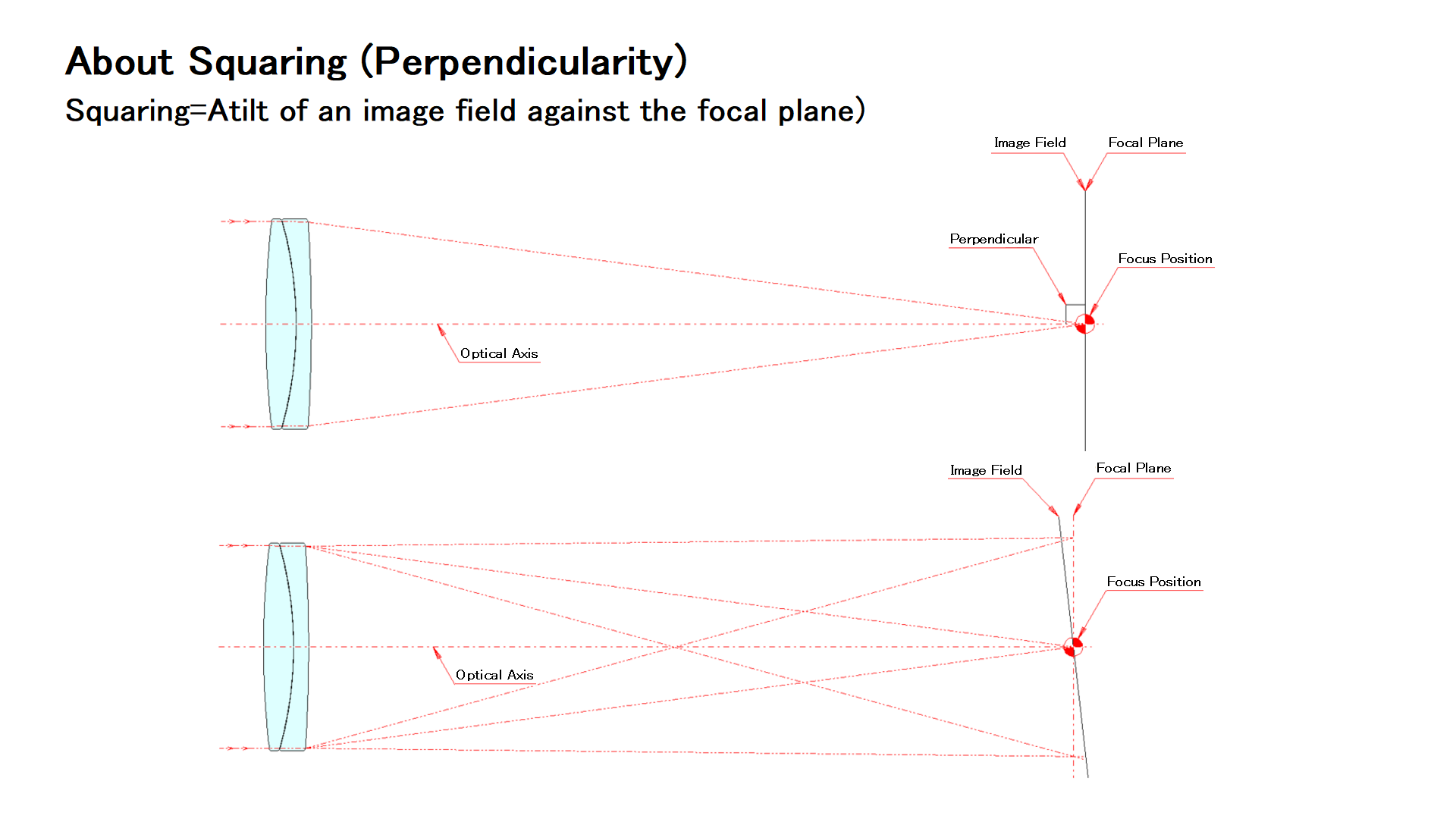
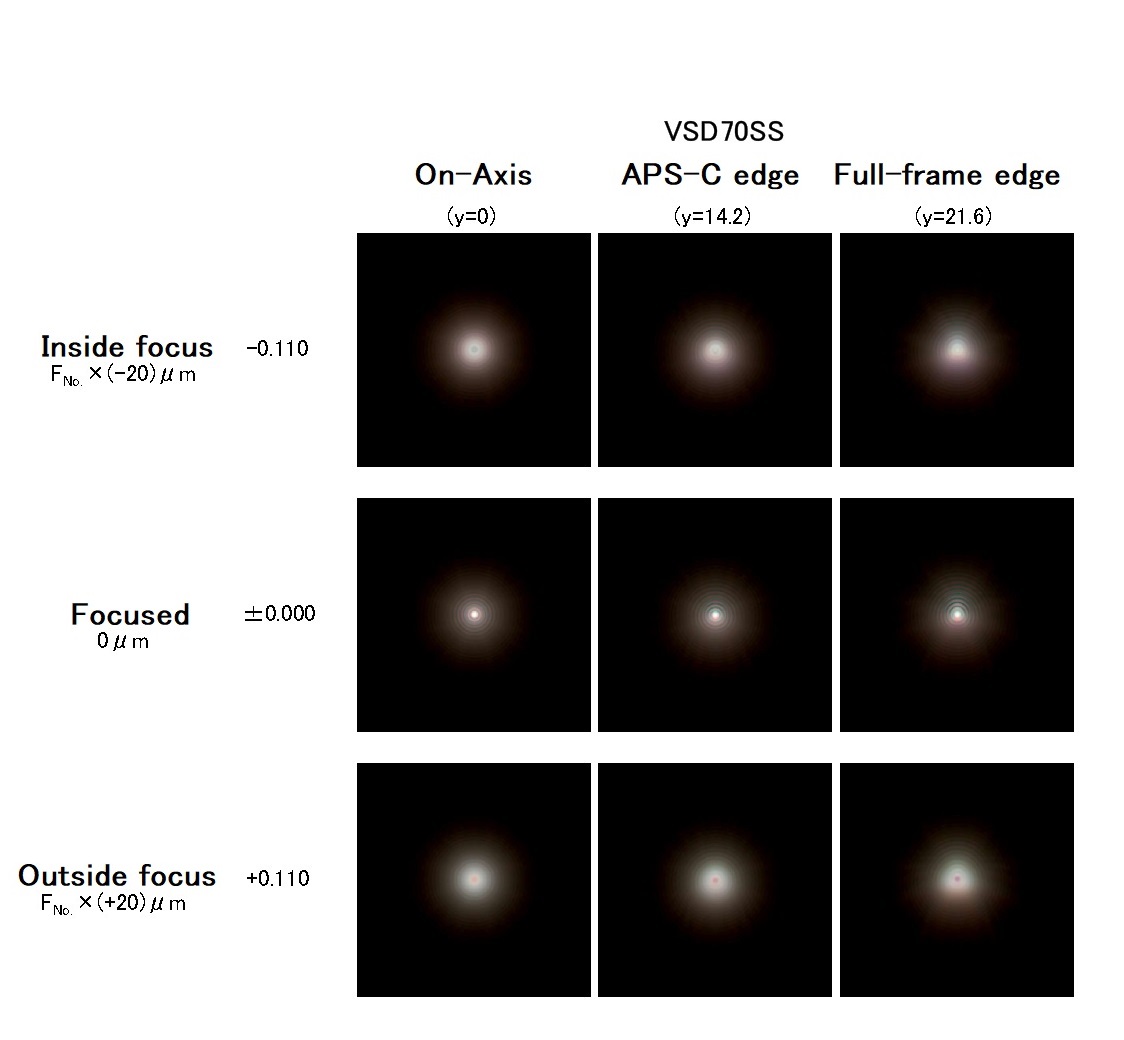
Regardless of the user's level of experience, the VSD70SS is designed with a forgiving focus characteristic that makes it easier to achieve consistently excellent imaging results. Its focus tolerance keeps the image within the Airy Disc in a wider range of focus adjustment, making it less sensitive to slight focusing errors or sensor tilt.
As a result, color fringing and distortion of star images near the edge of the field are minimized, even when focus or optical alignment is not absolutely perfect.
The VSD70SS consistently delivers sharp, beautiful, and uniform star images across the entire imaging field, providing reliable results from image capture through post-processing. This allows you to make the most of every precious imaging opportunity. -
Uniform illumination with virtually no vignetting
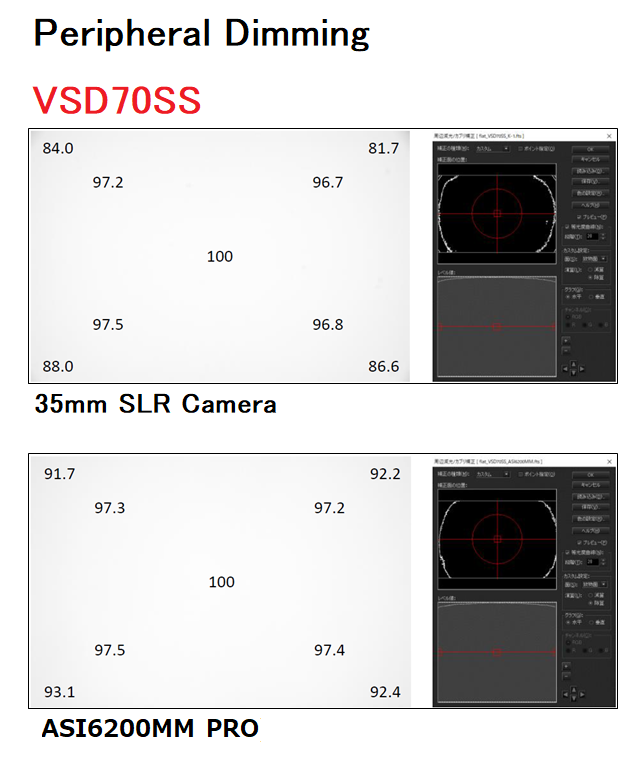
Most astrographs exhibit some degree of peripheral light falloff caused by optical vignetting, often requiring flat-field calibration or other post-processing to correct uneven illumination.
To minimize this effect, the VSD70SS employs a large-diameter rear lens group that maintains more than 90% illumination at the very edge of its 55 mm image circle. The exceptionally even illumination across the entire image field greatly reduces peripheral light falloff, minimizing—or in many cases eliminating—the need for vignetting correction during post-processing.
As a result, image processing becomes faster and more efficient, allowing you to concentrate on capturing and enjoying exceptional astrophotographs. -
Rich gradation and beautiful star Images across the entire field
Minimal vignetting not only maintains ample illumination across the entire image field but also minimizes non-axisymmetric flares around bright stars caused by light diffraction. As a result, star images remain well defined even at the edge of the field. The excellent peripheral illumination also preserves subtle tonal gradations, allowing you to capture beautiful, high-quality astrophotographs.
Depending on your imaging system, some vignetting may still occur due to the camera body, lens mount, or other components. -
The MTF chart demonstrates excellent resolution and contrast
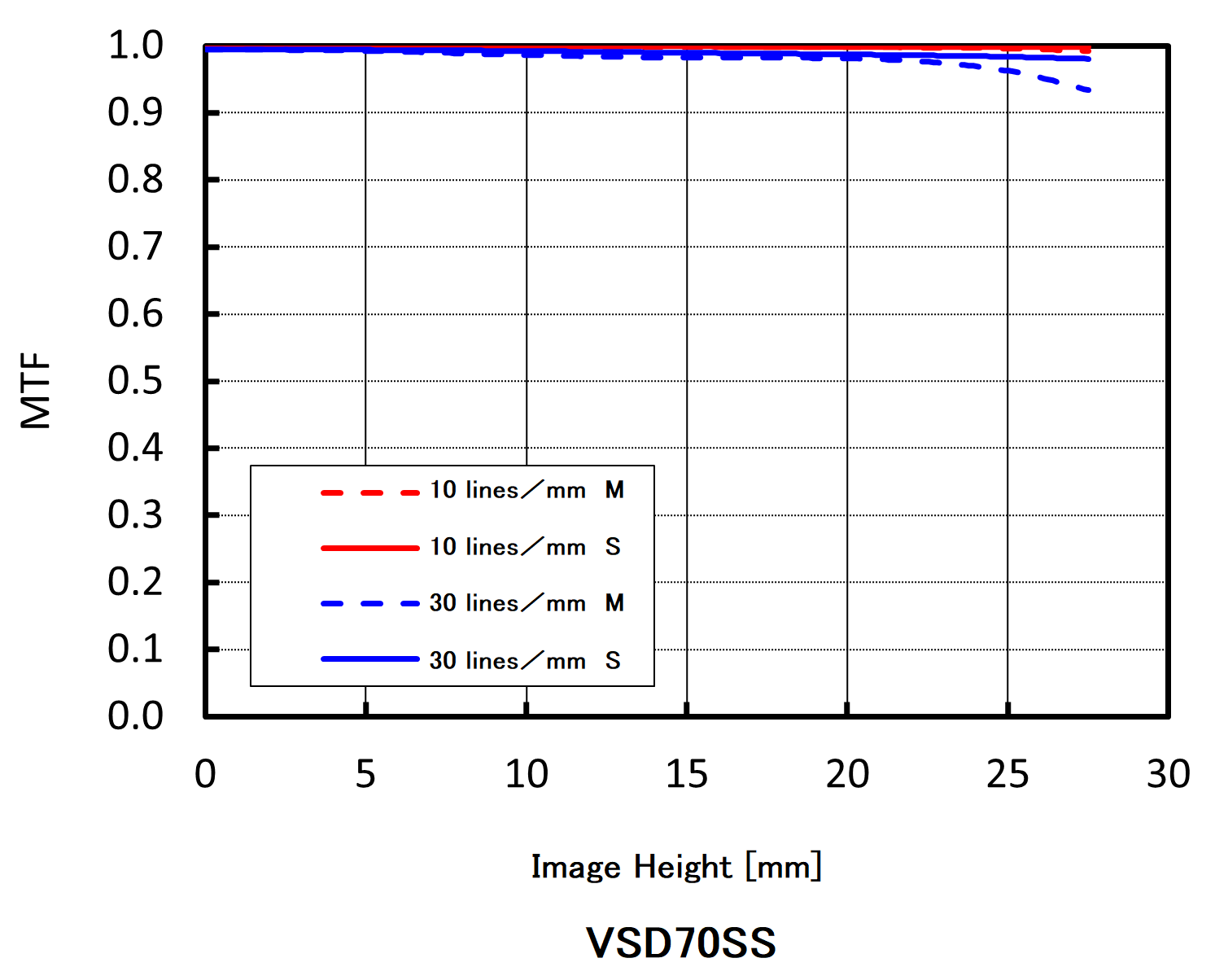
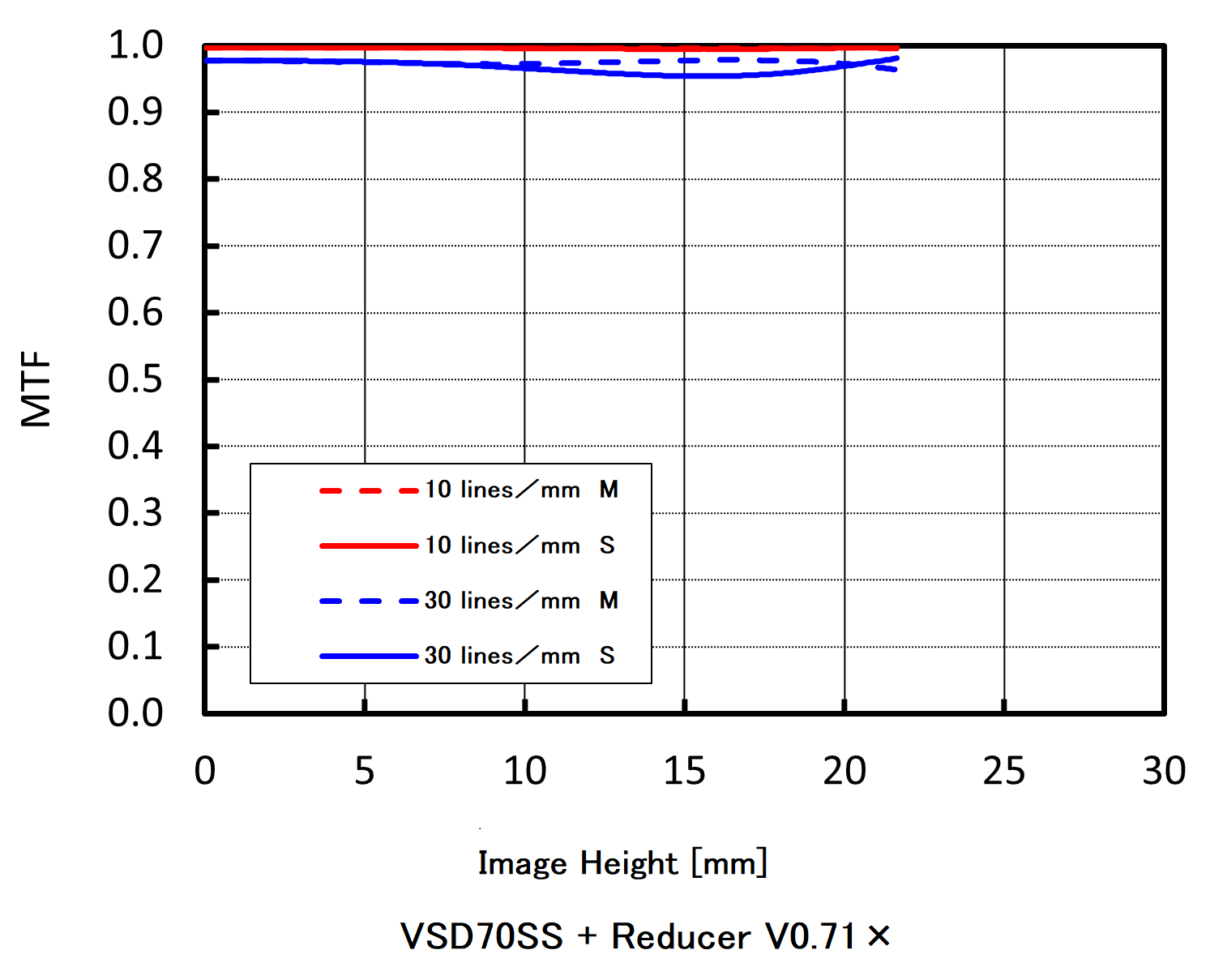
The MTF (Modulation Transfer Function) is a standard measure of a lens system's optical performance, showing how effectively it reproduces contrast at different spatial frequencies.
In the graph, the horizontal axis represents the distance from the center of the image, and the vertical axis represents contrast (maximum value: 1.0). The 10 line pairs per mm curve indicates contrast reproduction, whereas the 30 line pairs per mm curve represents resolving performance.
The closer the 10 line pairs/mm curve (red) is to 1.0, the higher the contrast reproduction. Likewise, the closer the 30 line pairs/mm curve (blue) is to 1.0, the higher the resolving power.
The exceptionally high MTF values maintained across the entire image field demonstrate the VSD90SS's ability to deliver outstanding contrast and resolution from the center to the edge of its image circle. -
Flat Image Field! 96.7% Strehl Ratio! Exceptional Visual Performance!
The VSD70SS delivers a remarkably flat field, allowing sharp, pinpoint star images across the entire field of view when used with a high-quality eyepiece at low-power wide-field. At the center of the field, the VSD90SS achieves an outstanding Strehl ratio of 96.7% at visual wavelengths.
This surpasses the 95.7% Strehl ratio of the highly acclaimed SD81SII apochromatic refractor, demonstrating the VSD70SS's exceptional optical quality. Its outstanding optical performance also makes it an excellent choice for high-magnification observations of the Moon and planets. -
Large, Versatile Focuser
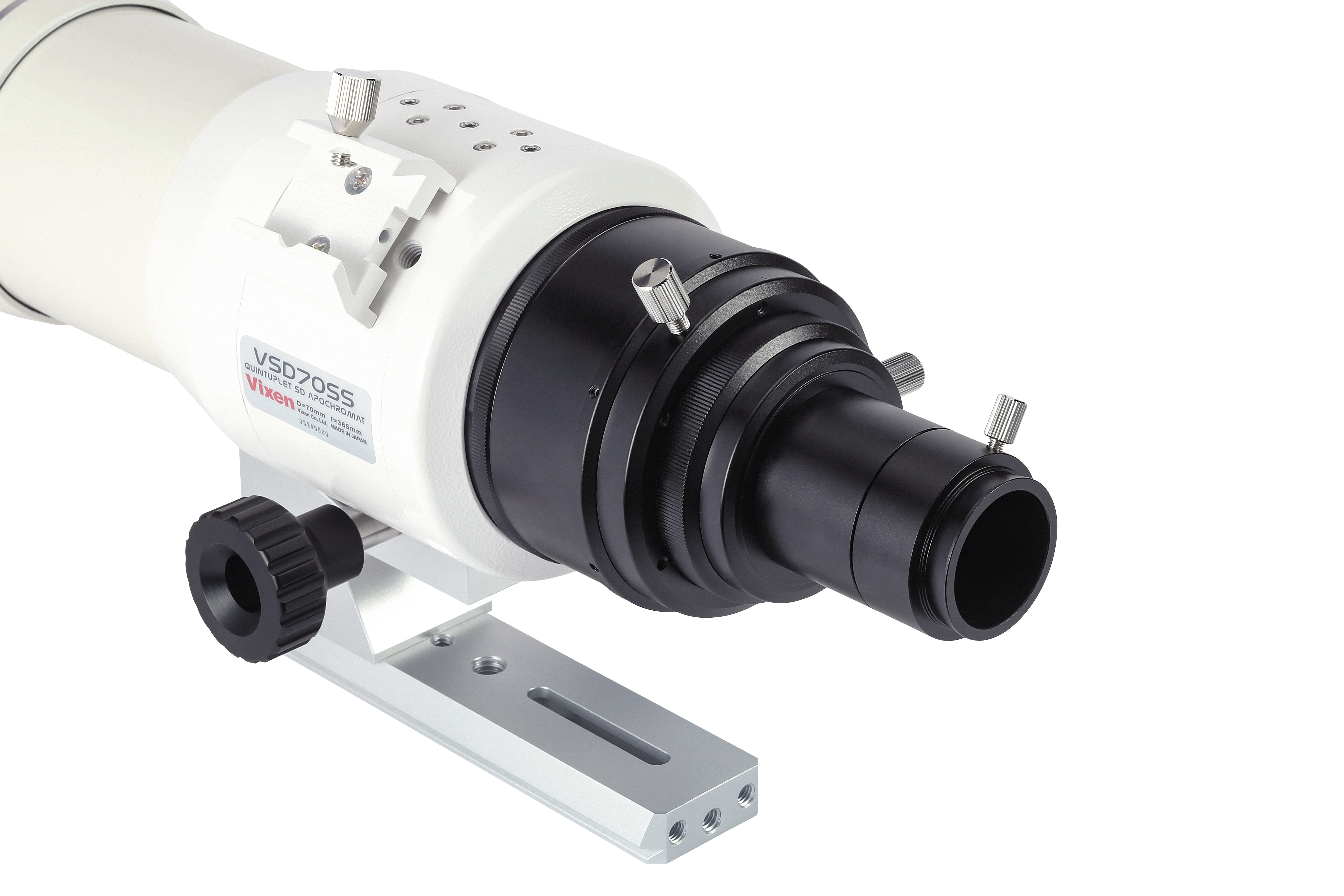
The VSD70SS is equipped with a large 87.5 mm focuser that fully utilizes its generously illuminated 55 mm image circle.
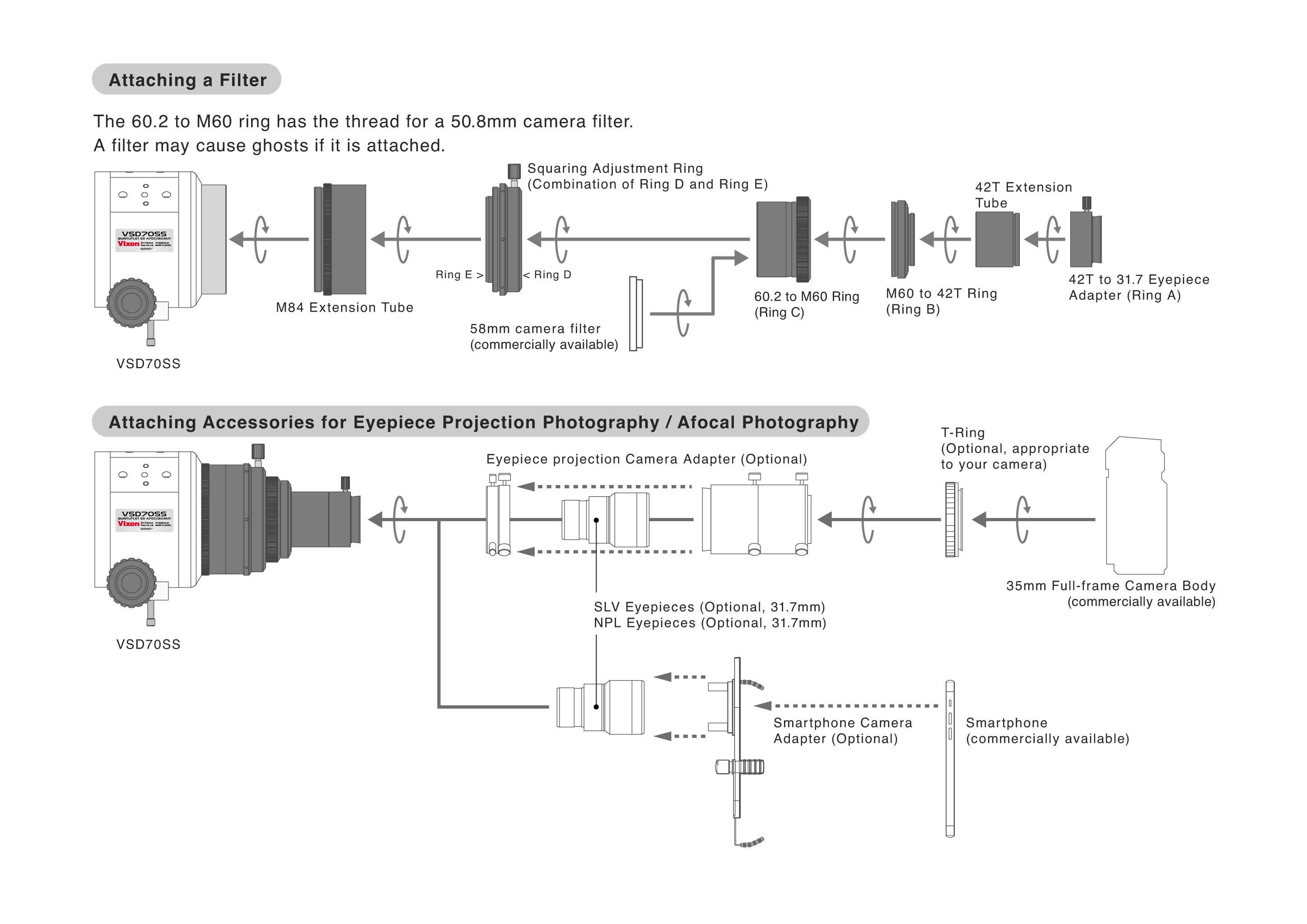
Compatible with a wide variety of accessories, the focuser offers outstanding versatility for everything from astrophotography with large-format and 35 mm full-frame cameras to visual observation.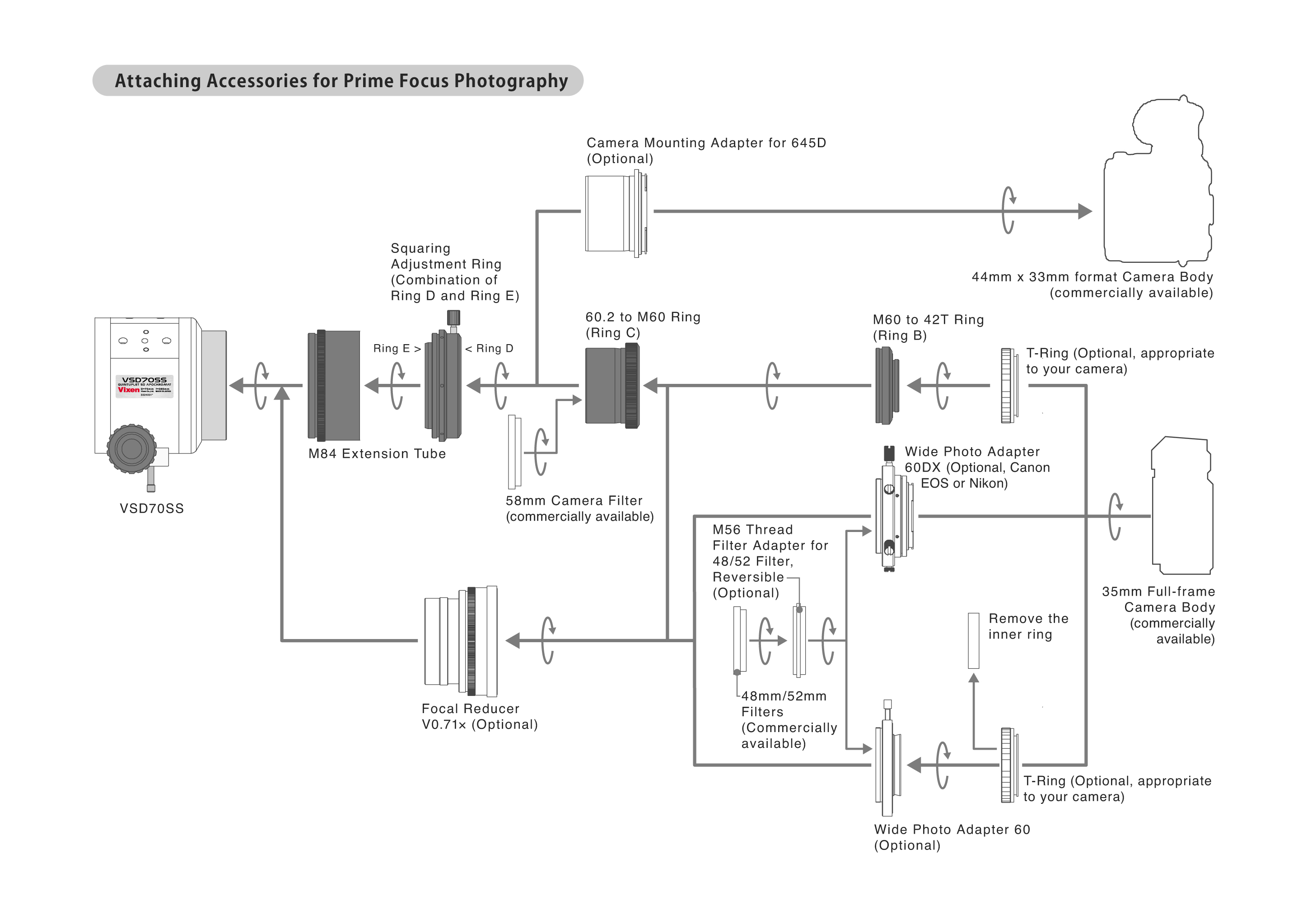
-
Precision Drawtube Lock Lever
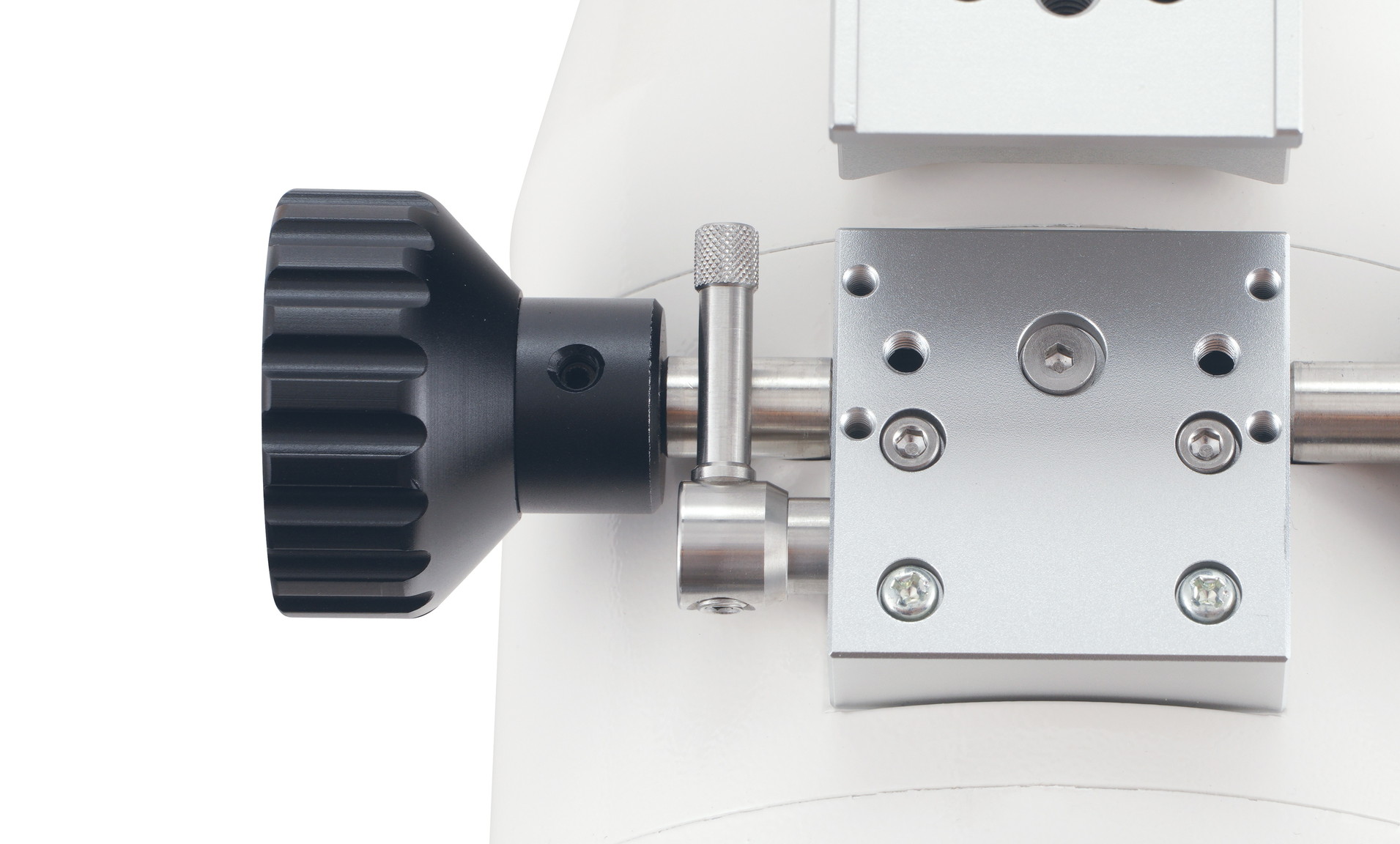
The focuser drawtube is equipped with a lock lever that securely holds the drawtube in place, even when heavy imaging equipment such as a large-format camera or a CCD camera with a large sensor is attached. The lock lever locks the drawtube by clamping its rack gear, preventing focus shift or changes in image framing while the lock is being engaged.
-
Compatible with Motorized Focusers
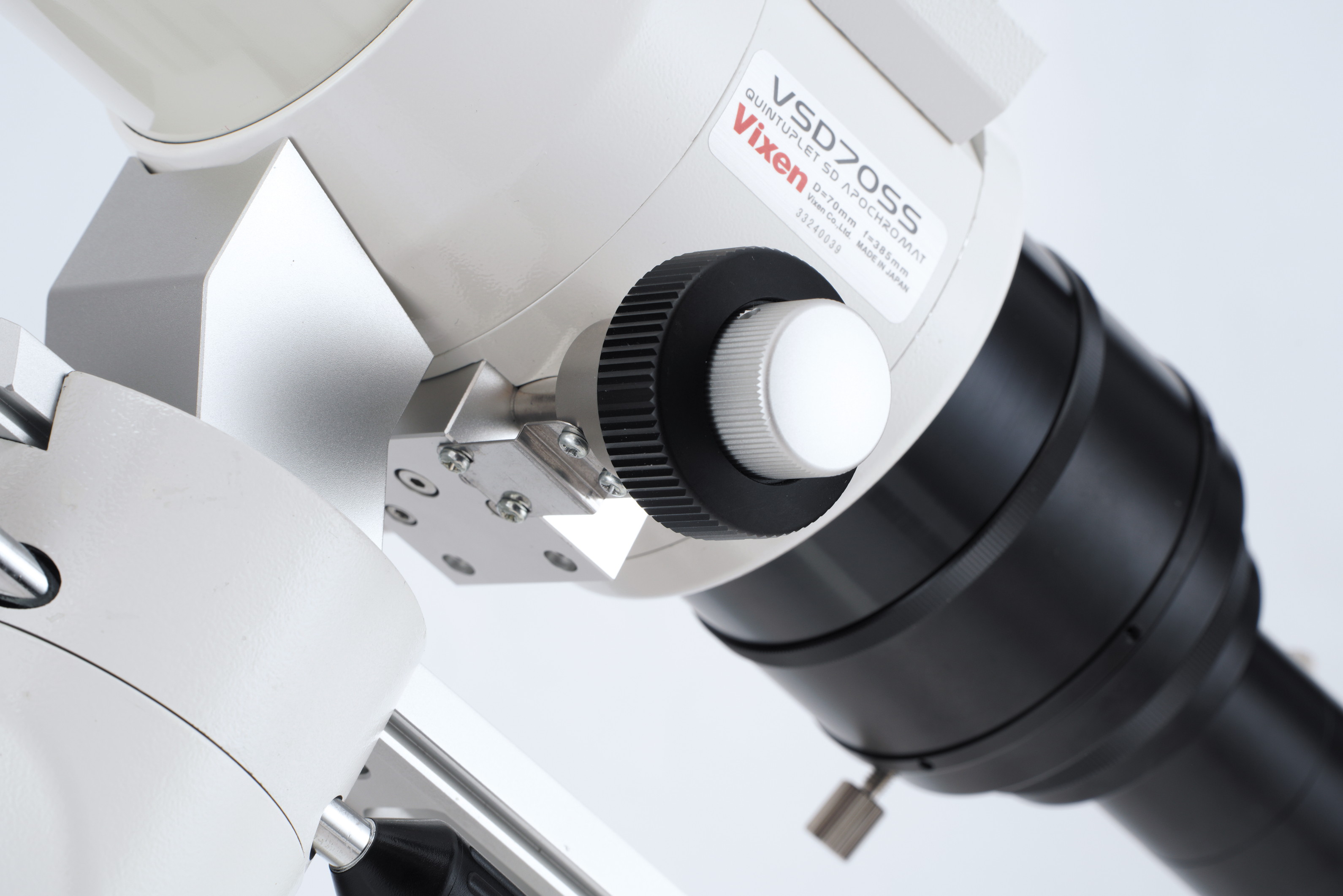

For even finer focusing, an optional dual-speed focuser (sold separately) is available for the VSD70SS. The telescope is also compatible with the ZWO EAF (Electronic Automatic Focuser) and other comparable electronic focusers, allowing automated focusing for astrophotography.
-
Short Optical Tube for Easy Transport and Storage
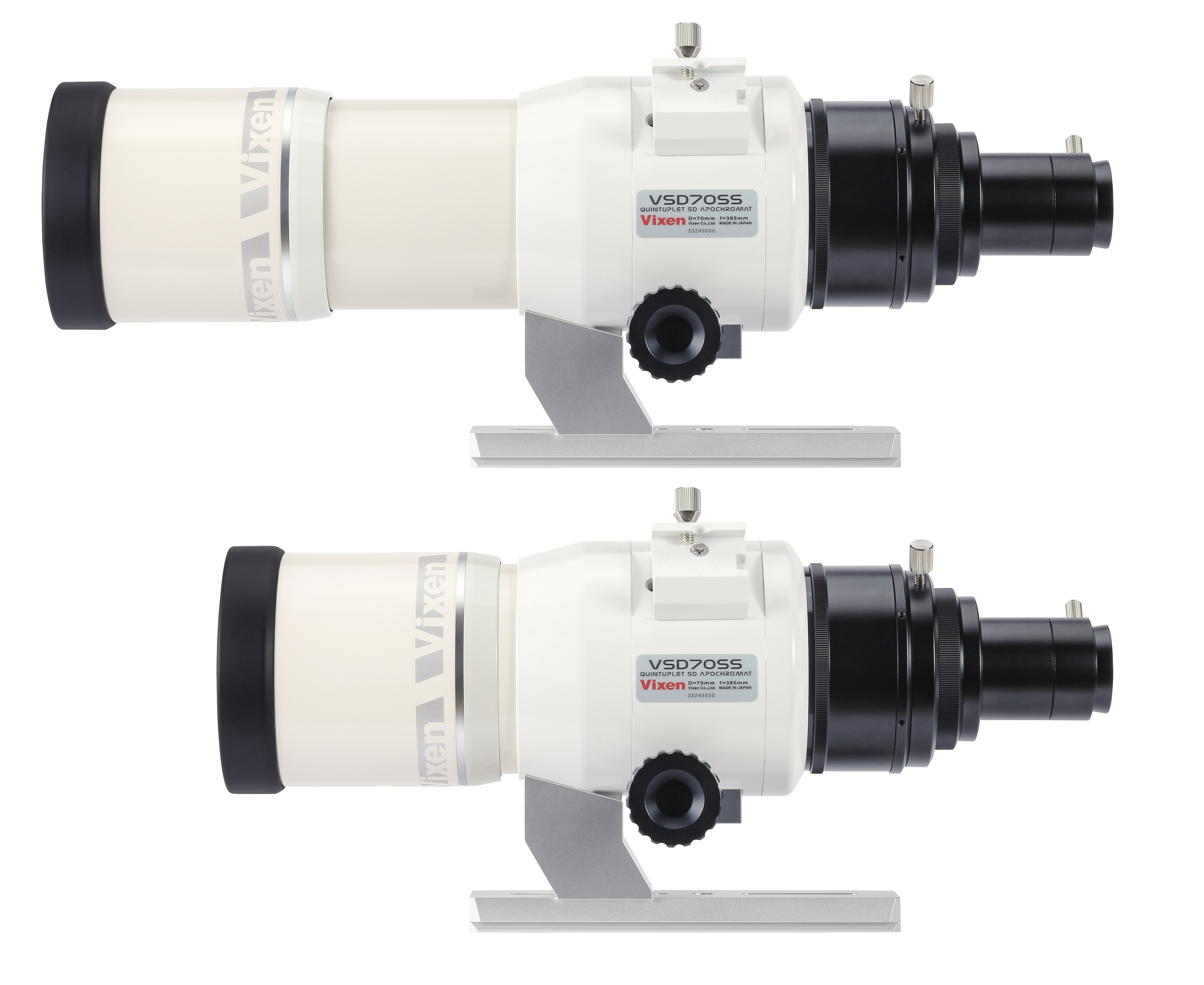
The VSD70SS optical tube has an overall length of 444 mm, which can be reduced to 368 mm by reversing the dew shield for storage. (The overall length can be further reduced to 368 mm by removing the rear accessories.) Despite its high-performance optical system, the VSD70SS packs down to a remarkably compact size, making it easy to store, transport, and take to observing or imaging sites.
-
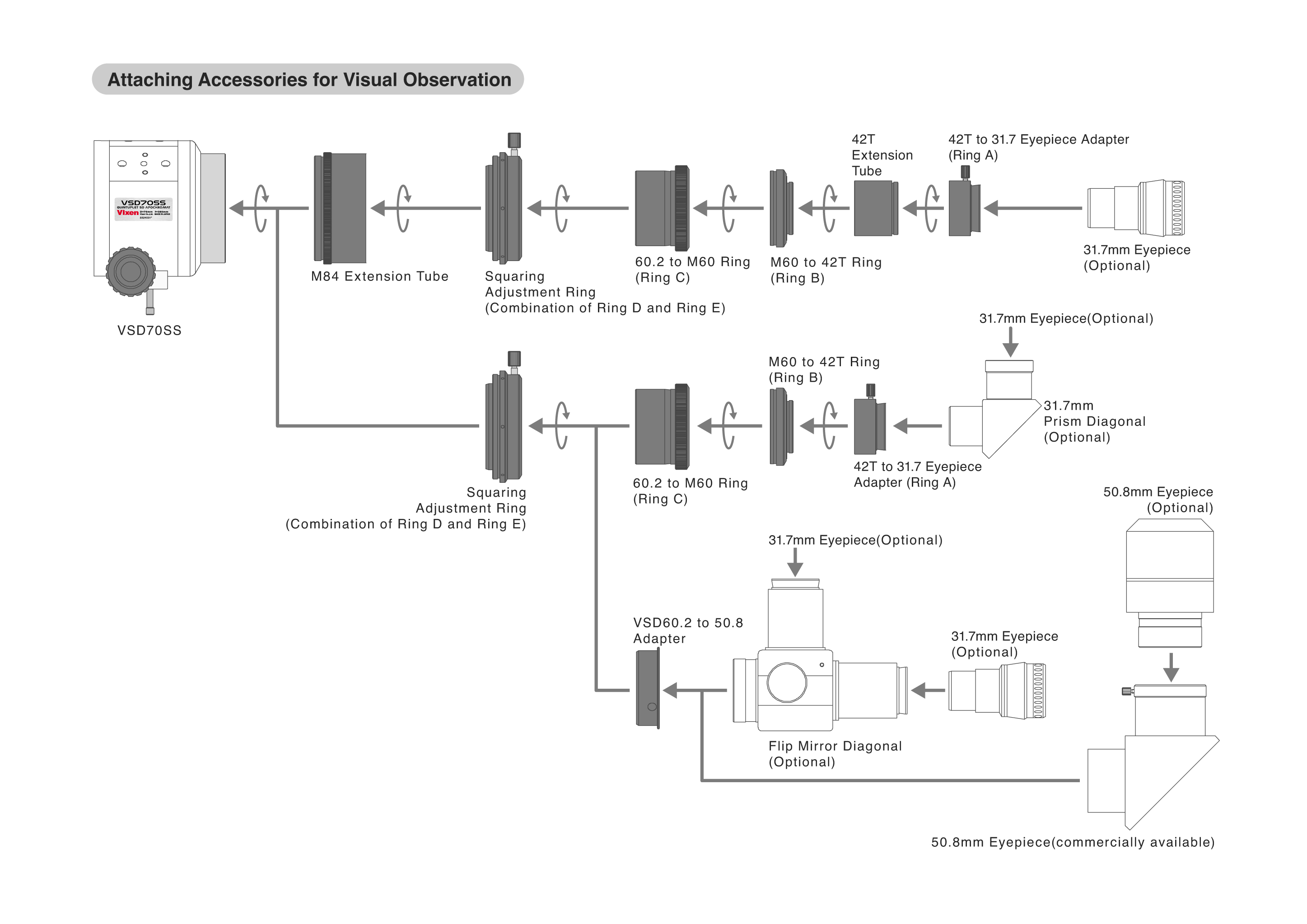
A Comprehensive Range of Accessories for Visual Observation and Astrophotography
1. VSD70SS Case
2. Reducer V0.71X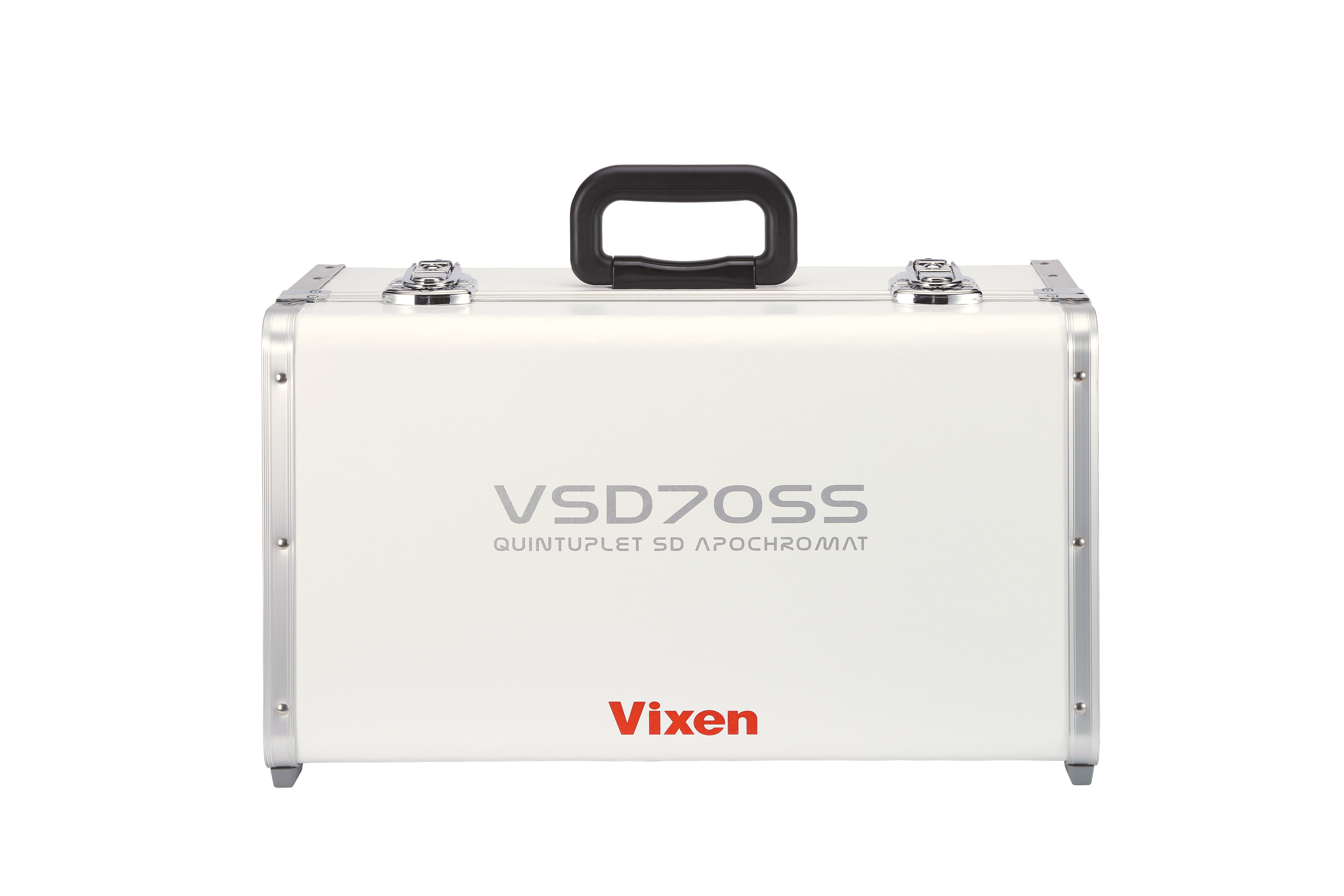
3. Wide Photo Adapter 60DX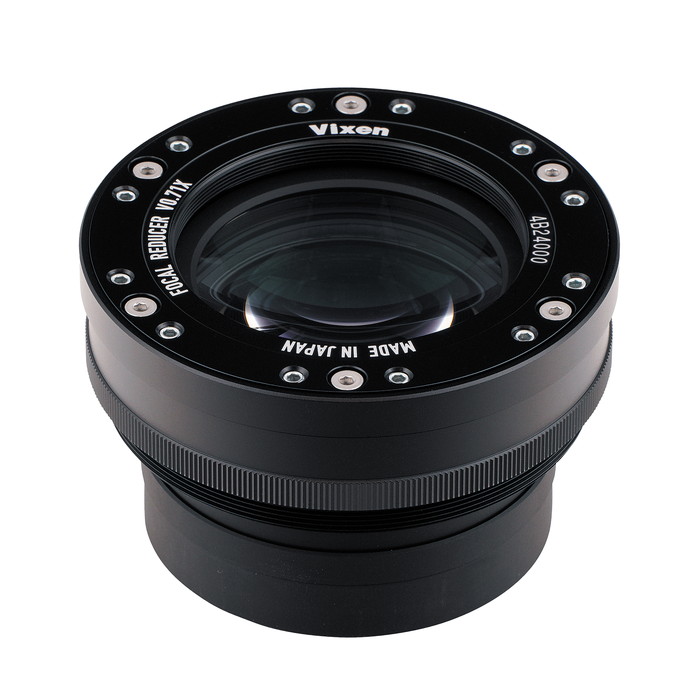
4. Camera Mount 645D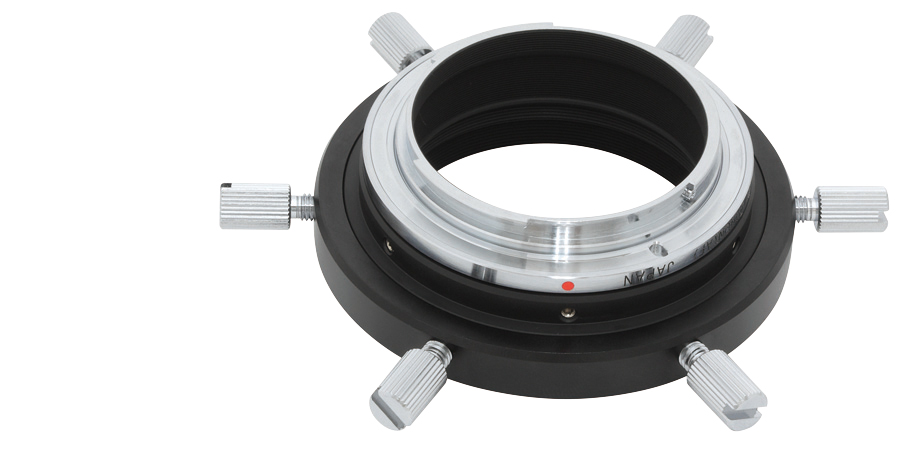
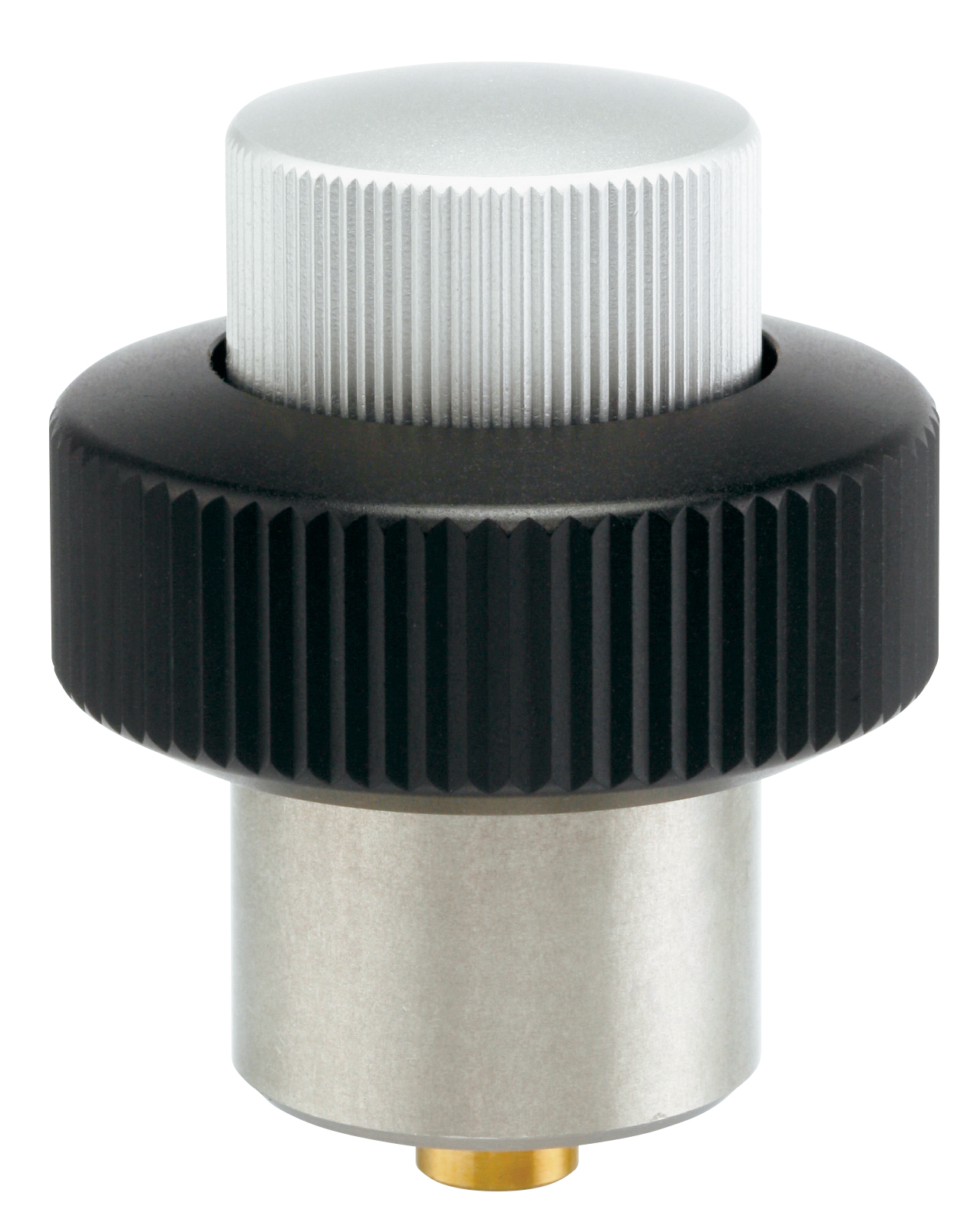
5. Dual speed focuser"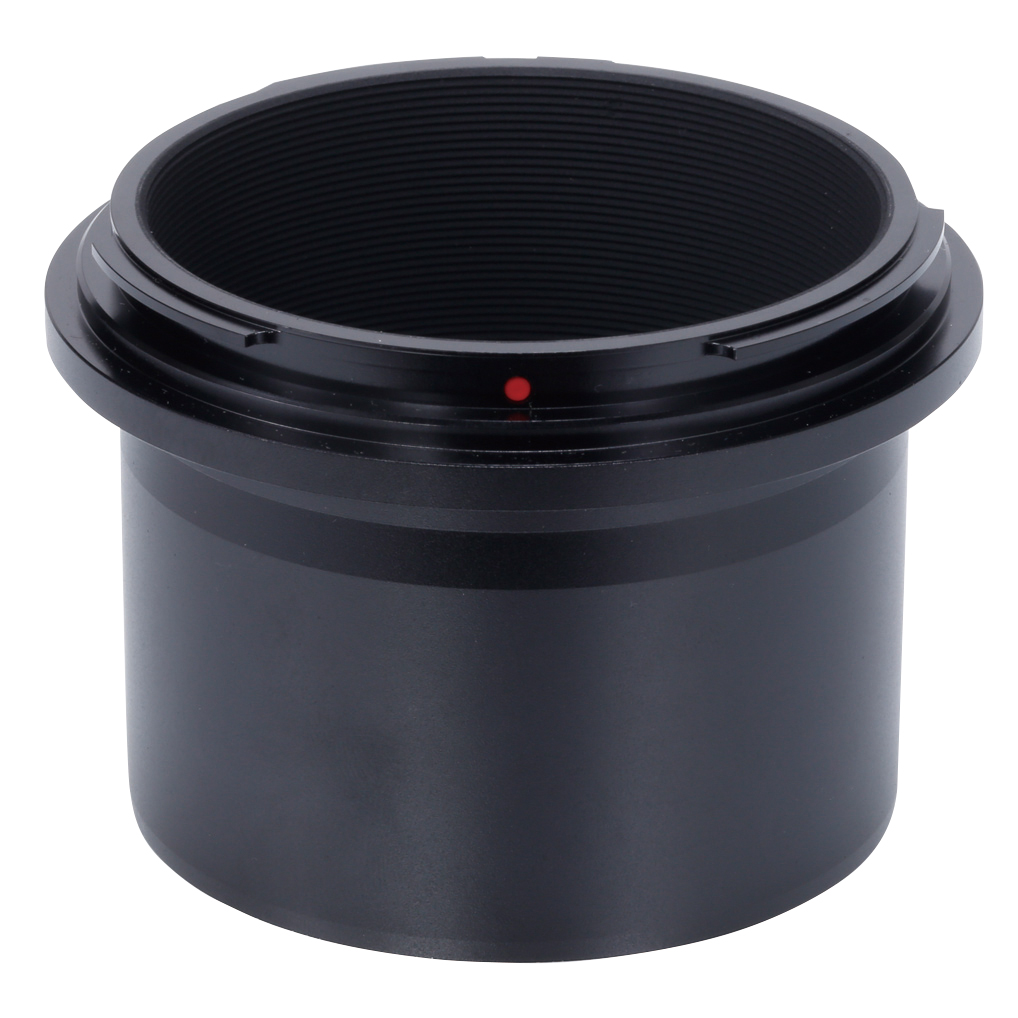
Specifications
VSD70SS Optical Tube Assembly
-
Objective Design / Effective ApertureFive-group five-element SD Apochromat, AS coatings / 70mm
-
Focal Length (Focal Ratio)385mm (F5.5)
-
Resolving Power・Limiting Magnitude1.66 arc seconds・11.0
-
Light Gathering Power100X unaided eye
-
Image Circle55mmφ(Over 90% illumination at the round edge)
-
Optical Tube Size・Weight90mm dia. X 368-444mm long (shortened at 299mm long), 3.5kg
-
Finder ScopeNot included, optional 7X50mm Finder scope II, 50mm XY Finder bracket II
-
Focusing SystemRack-and-pinion
-
Accssory Threads / SizeThreads/ 84mm (pitch 1mm), 60mm (pitch 0.75mm), 42mm for T-ringPush-fit / 60.2mm, 50.8mm, and 31.7mm
-
Eyepiece (31.7mm)Not included.
-
Plates and/or Tube RingsDual slide bar
-
Provided AccessoriesVSD60.2 to 50.8 Adapter, 1/4inch screw (L:9mm) x 2 pcs., Allen wrenches (3mm,2mm, 1.5mm and 3/16inch)
-
PhotographyEyepiece Projection, Prime Focus, and Aforcal Imaging with smartphone are possible
-
Solar ObservationUsing optional Sun projection screen Set B (Short-time observing is recommended)
-
Dimensions WxDxH444×144×174mm
-
Weight3.5kg
the set
- VSD70SS Optical Tube Unit
accesssory
- VSD60.2 to 50.8 Adapter
- 1/4inch screw (L:9mm) x 2 pcs.
- Allen wrenches (3mm, 2mm, 1.5mm, 3/16inch)