Vixen | A leading manufacturer of astronomical telescopes and binoculars
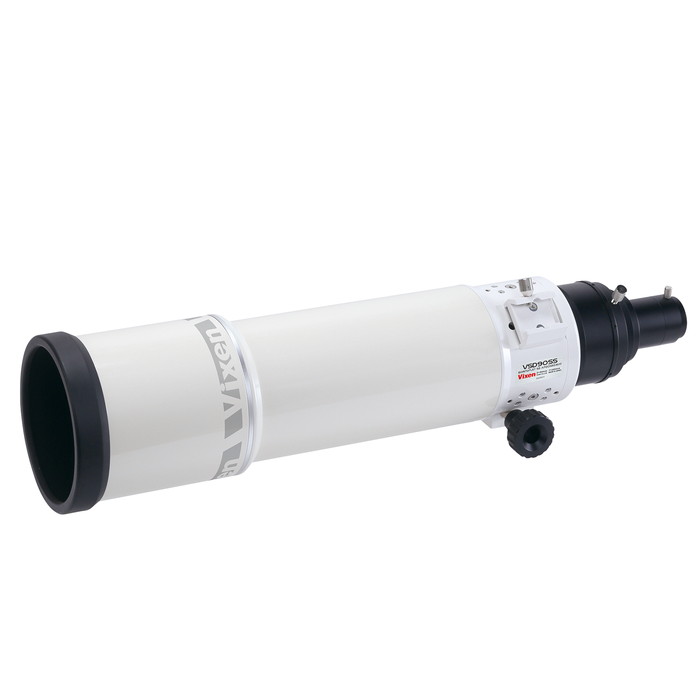
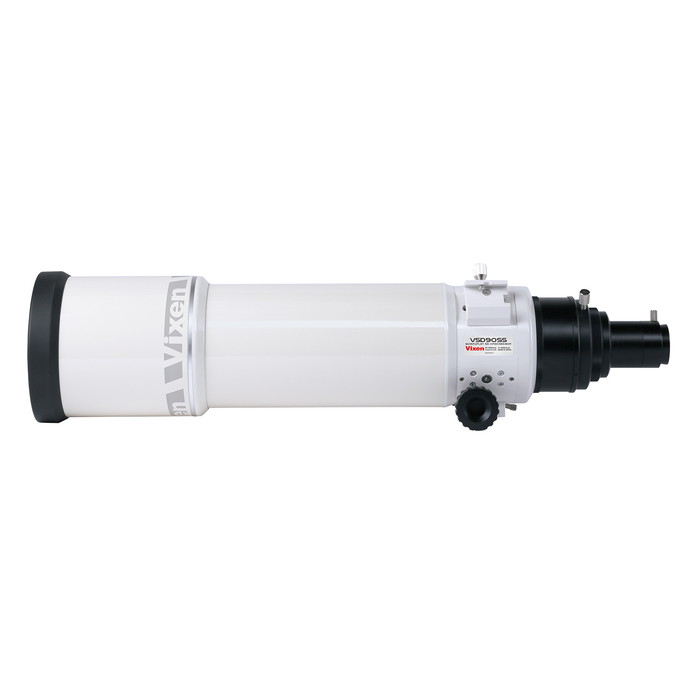
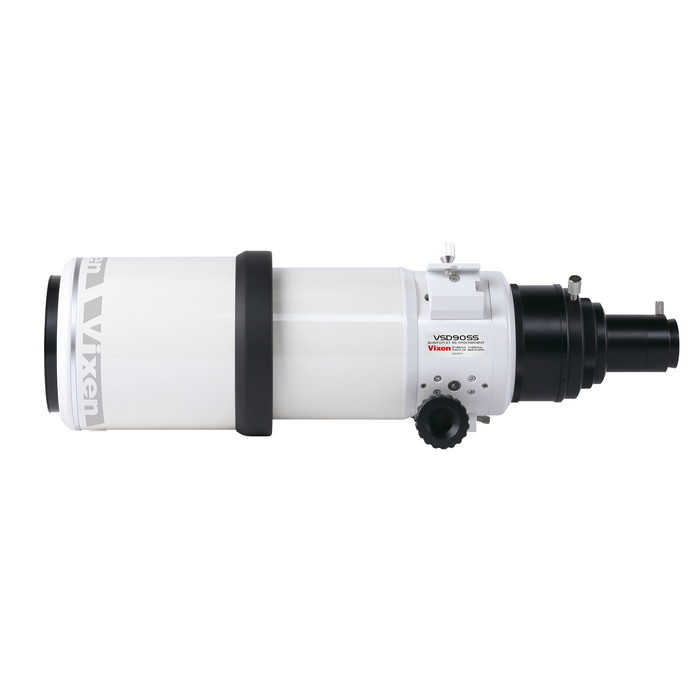
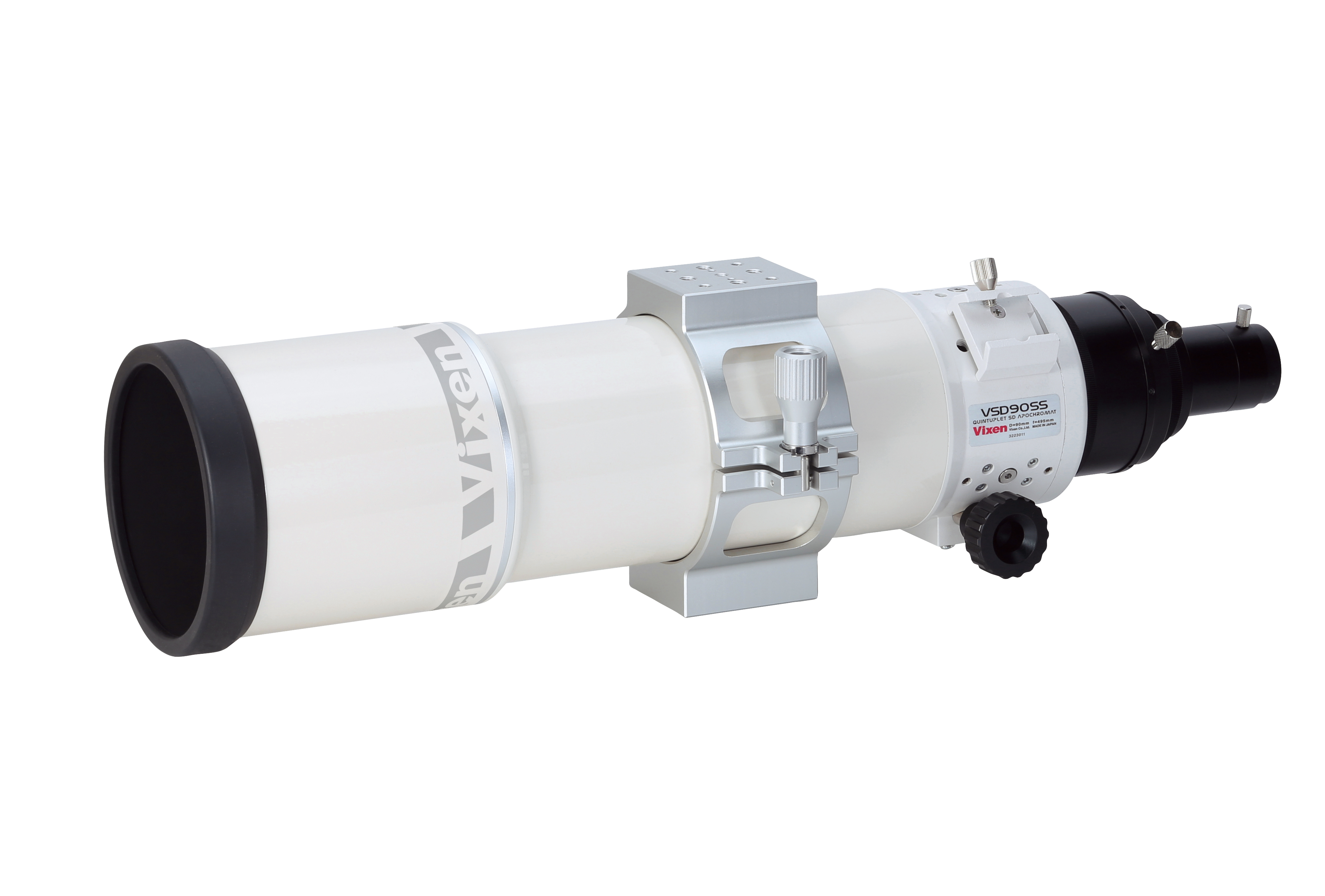
Vixen Telescope VSD90SS Optical Tube Assembly
loading
Suggested retail price: Contact local dealer
A five-group, five-element Astrograph with a fast focal ratio. This flagship model offers outstanding performance and exceptional ease of use for visual observation and astrophotography.
Its sophisticated optical design incorporates two SD lenses and one high-refractive-index ED lens, producing images that are virtually free of aberrations. The result is exceptionally sharp, beautifully defined star images that remain consistent across the entire imaging field, even when used with a full-frame DSLR or a larger 44mm x 33mm format camera. From high-magnification planetary observation to wide-field imaging of deep-sky objects, this telescope delivers exceptional performance for both visual observing and astrophotography.
Vixen Telescope VSD90SS Optical Tube Assembly Description
-
Sharp, beautiful star images across the entire large-format image field
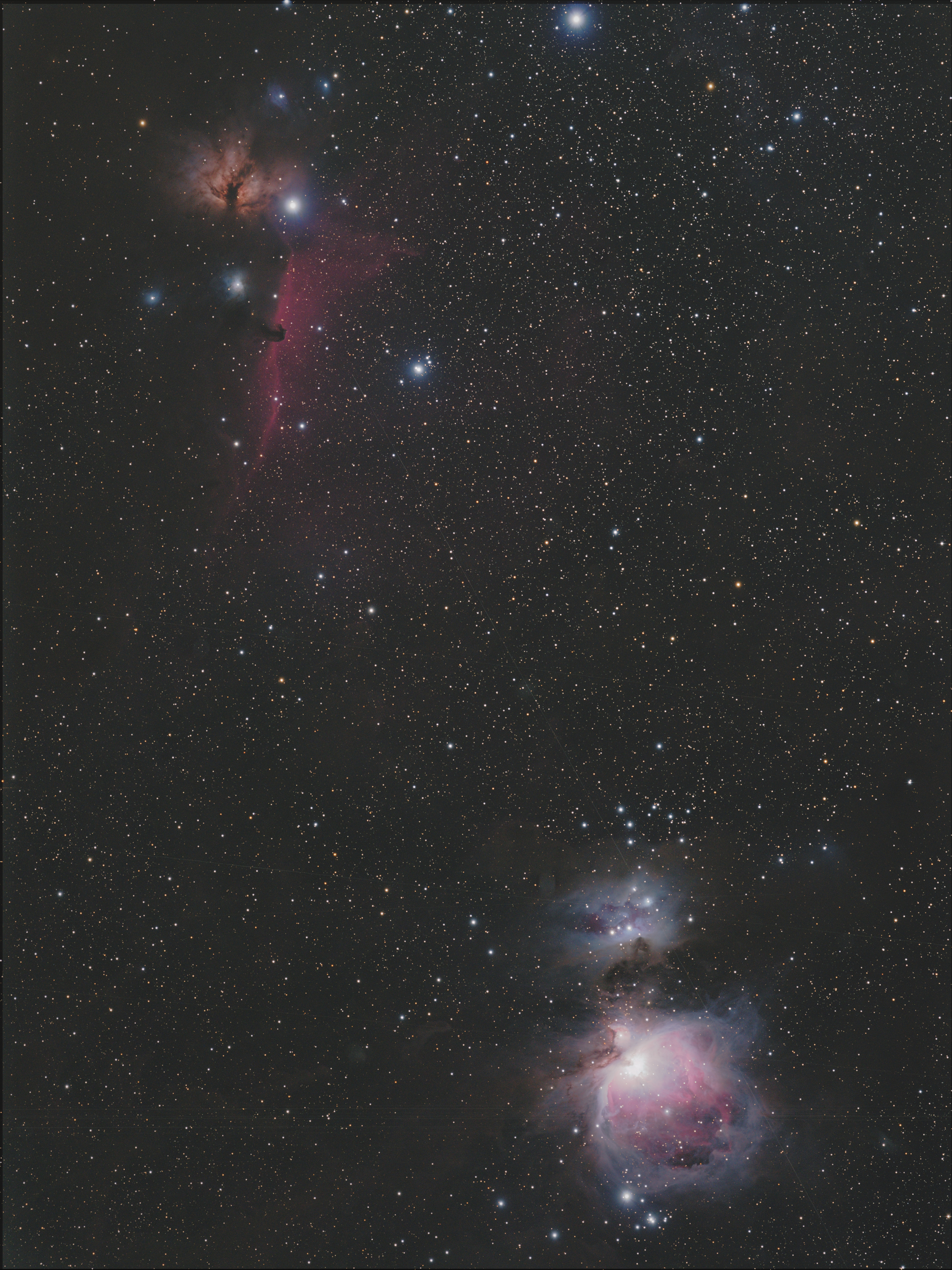
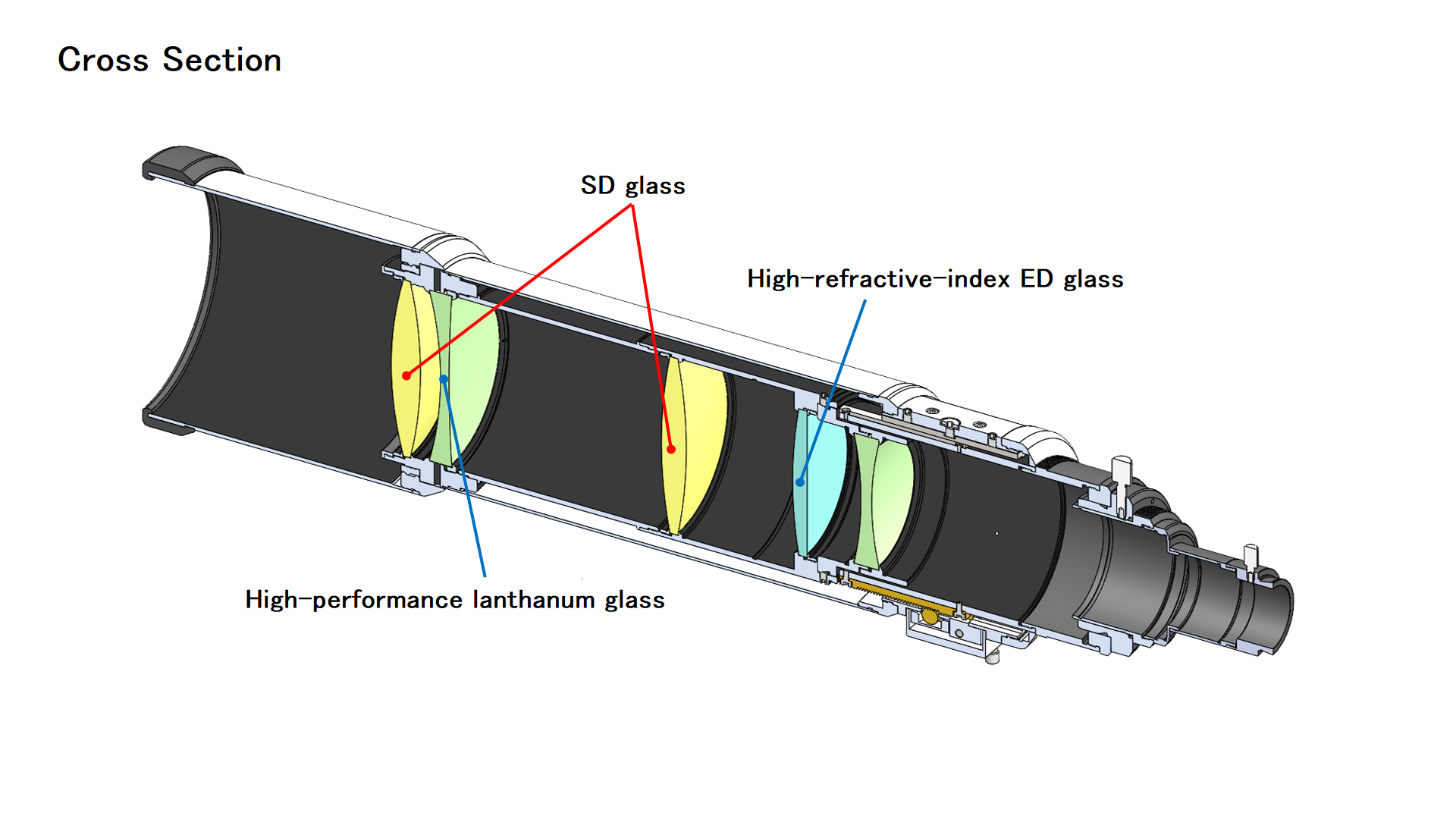
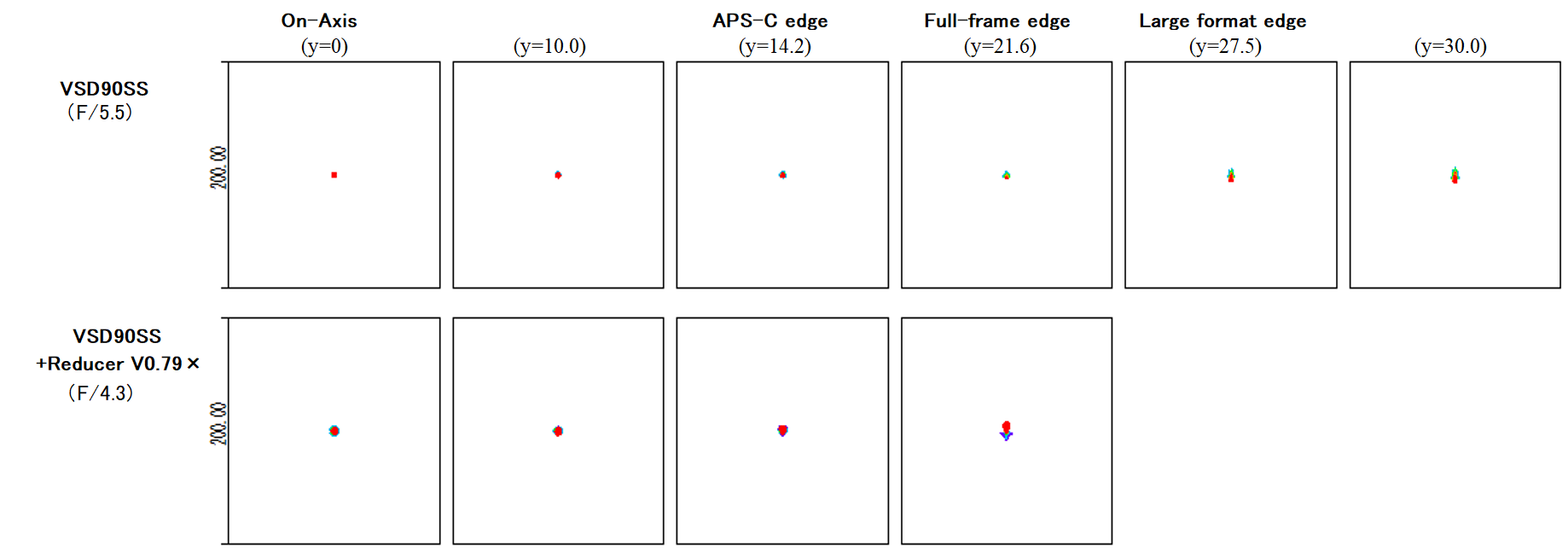
The VSD90SS features an advanced optical system incorporating two SD glass elements and one high-refractive-index ED glass element as convex lenses, together with two concave elements made of newly developed high-performance lanthanum glass. This sophisticated optical design suppresses on-axis chromatic aberration and astigmatism to the greatest extent possible. The result is an exceptionally sharp, uniform image quality from the center to the edge of a full-frame DSLR sensor, while also maintaining outstanding performance across the entire field of a large 44 mm × 33 mm* imaging sensor.
*When the optional focal reducer is used, the illuminated image field is optimized for a 36 × 24 mm full-frame sensor. -
Engineered to consistently produce sharp, beautiful star images
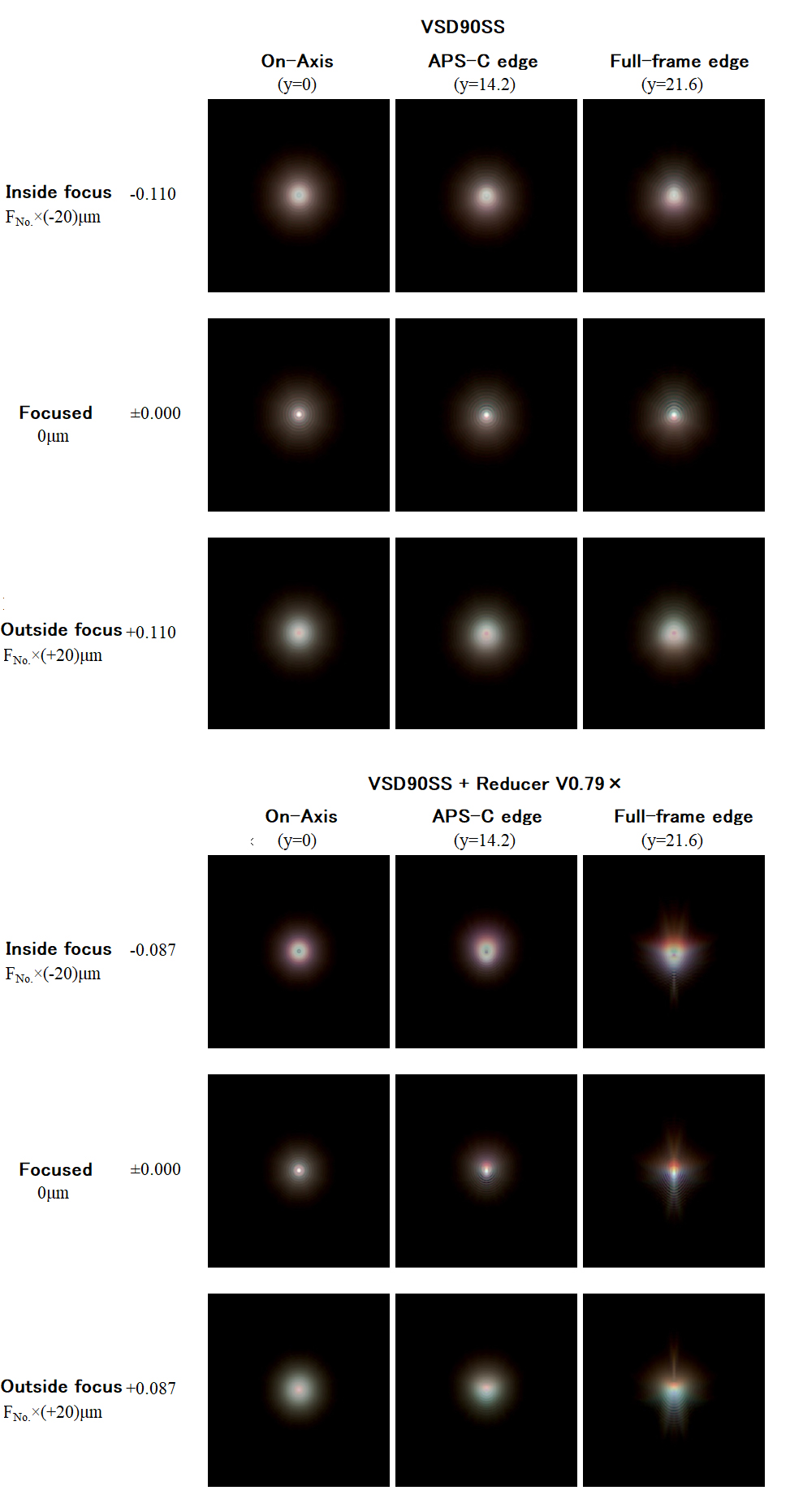
The VSD90SS was engineered with a certain focus tolerance, enabling astrophotographers of all skill levels to achieve consistently outstanding results. Its advanced optical design extends the critical focus range while maintaining the focused image within the Airy disc. Consequently, even slight focusing errors or minor camera-squaring inaccuracies have minimal effect on stellar color reproduction or star shapes at the edge of the image field. The result is round, crisp, and beautifully defined stars across the entire imaging field. This forgiving design not only increases shooting efficiency but also reduces the amount of corrective work required during image processing, allowing you to make the most of every clear night.
-
Fully illuminated image circle with virtually no vignetting
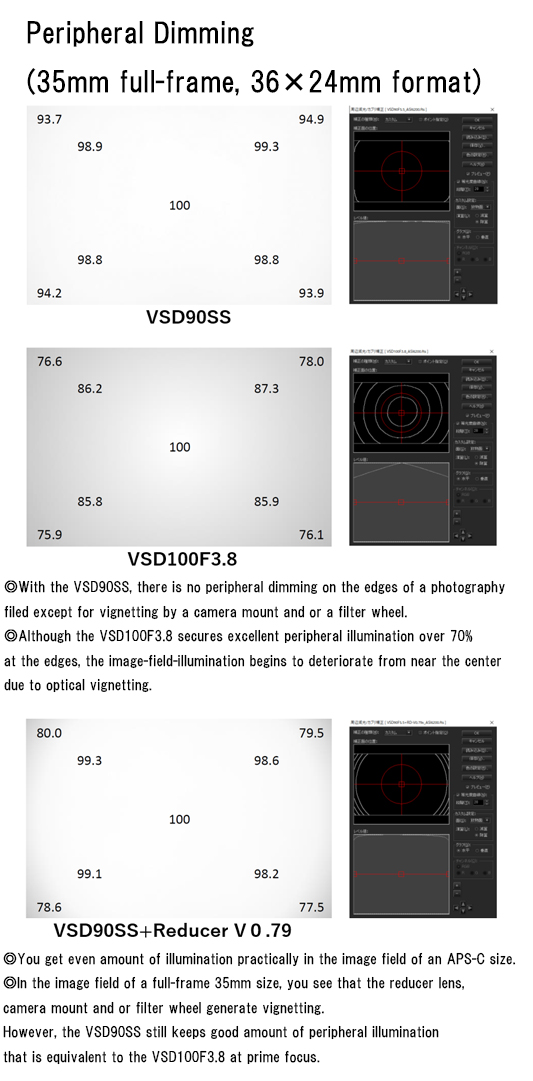
Generally, astrographs can exhibit optical vignetting, which is a gradual decrease in light rays towards the image periphery caused by rear lenses being shaded by the lenses in front. Due to this peripheral dimming, it was not uncommon for users to need to process the image for compensation after shooting. To address this issue, the VSD90SS utilizes large aperture lenses in the rear elements and secures over 90% of light rays at the edge of a 60mm image circle. With uniform light intensity across the entire imaging field, you are not expected to need compensation for peripheral dimming, or if needed, it will be easier during image processing later.
-
Smooth light distribution produces beautiful star images
With virtually no optical vignetting, the VSD90SS maintains excellent illumination across the entire image field, minimizing diffraction-induced asymmetric flares around bright stars. The excellent peripheral illumination also preserves well-defined star images right to the edge of its 60 mm image circle. Rich tonal gradation is retained throughout the image, enabling you to capture astrophotographs with exceptional depth and natural brightness.
Mechanical vignetting may occur depending on the configuration of your imaging system, including the camera body, mount, adapters, and other accessories.
-
The MTF chart demonstrates excellent resolution and contrast
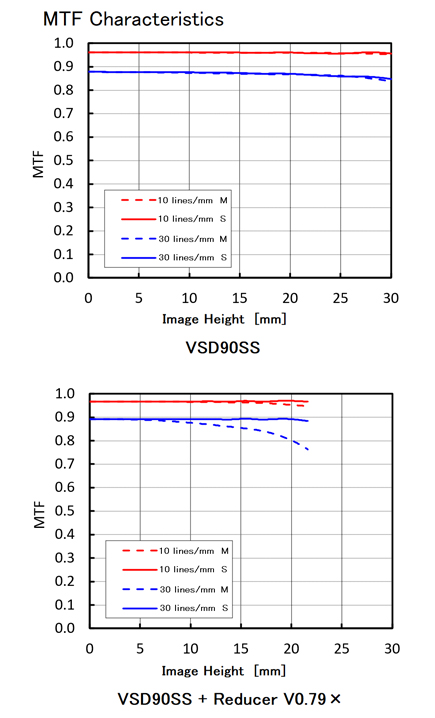
The MTF (Modulation Transfer Function) is a standard measure of a lens system's optical performance, showing how effectively it reproduces contrast at different spatial frequencies. In the graph, the horizontal axis represents the distance from the center of the image, and the vertical axis represents contrast (maximum value: 1.0). The 10 line pairs per mm curve indicates contrast reproduction, whereas the 30 line pairs per mm curve represents resolving performance. The closer the 10 line pairs/mm curve (red) is to 1.0, the higher the contrast reproduction. Likewise, the closer the 30 line pairs/mm curve (blue) is to 1.0, the higher the resolving power.
The exceptionally high MTF values maintained across the entire image field demonstrate the VSD90SS's ability to deliver outstanding contrast and resolution from the center to the edge of its image circle.
-
Flat imaging field!, 96.7% Strehl ratio!, Great visual observing!
The VSD90SS provides a flat field of view using a wide-field eyepiece of low magnification.
With a quality wide-field eyepiece, you get sharp images of stars in the whole field of view in visual observation.
The center of field of view achieves strehl intensity of 96.7% proudly in visual-ray-wavelengths.
This strehl ratio exceeds the SD81SII apochromat at 95.7%, recognized with its superb optics, and it works excellently in observing planets at high magnification. -
Large, Versatile Focuser
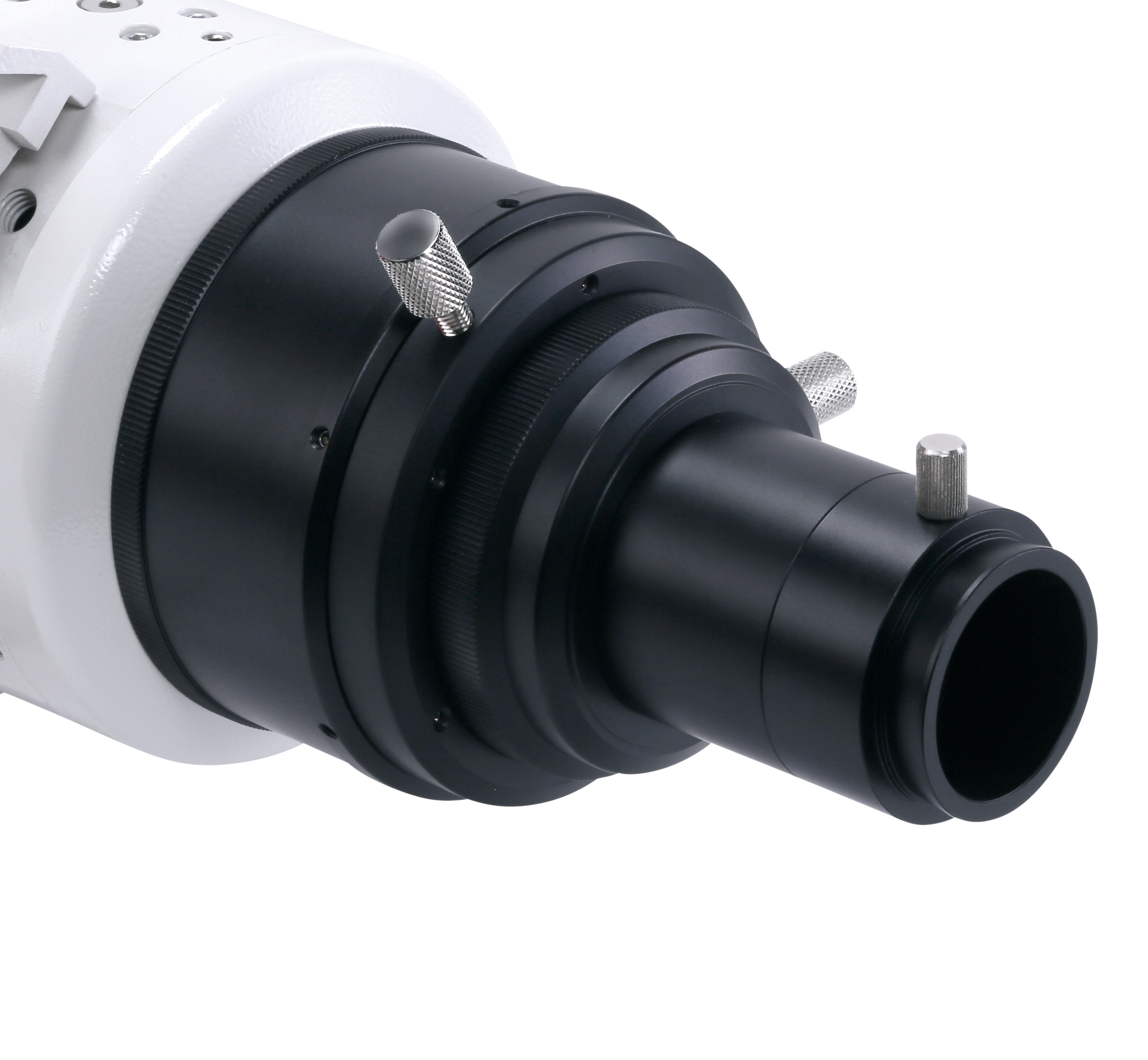
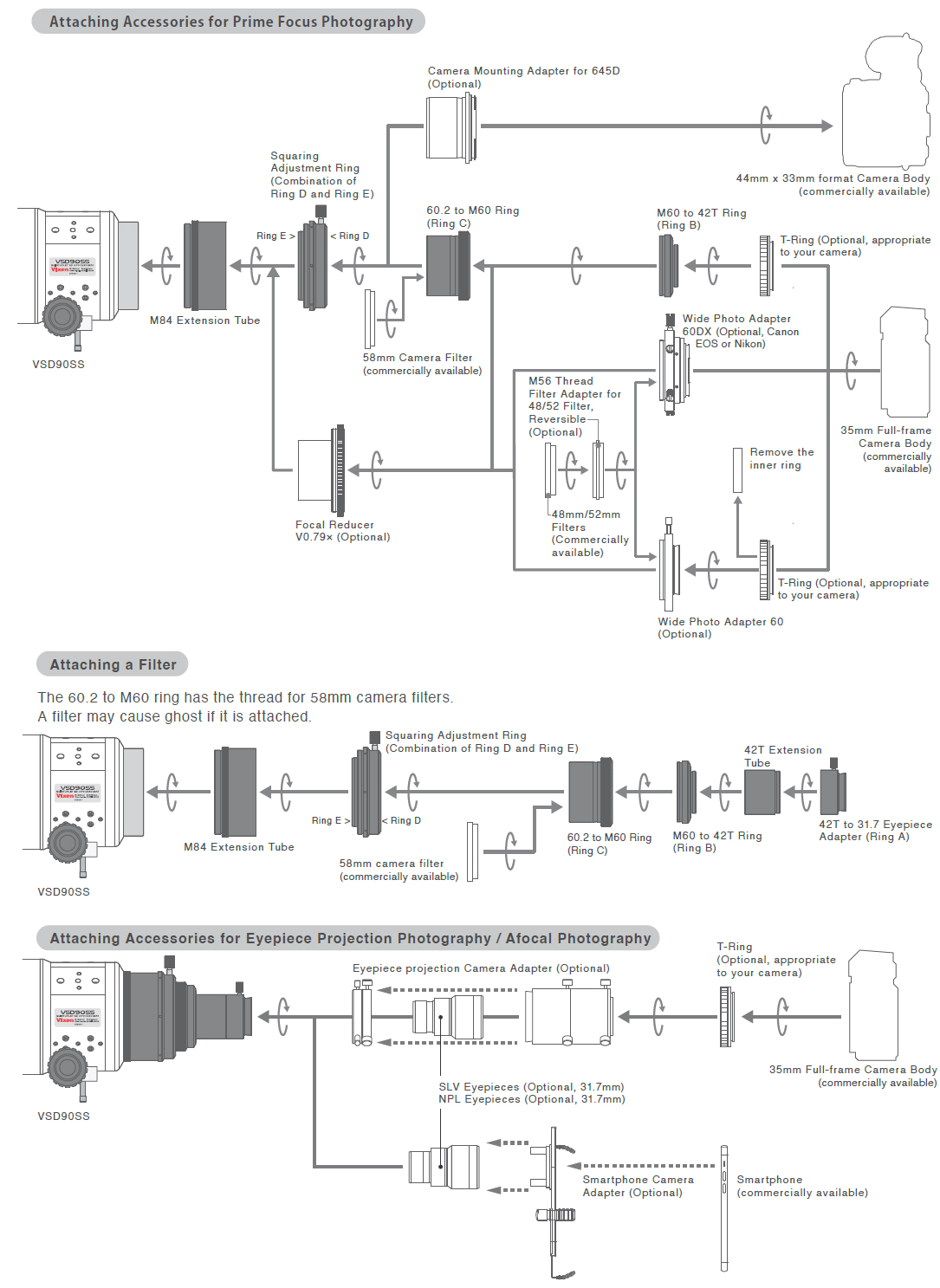
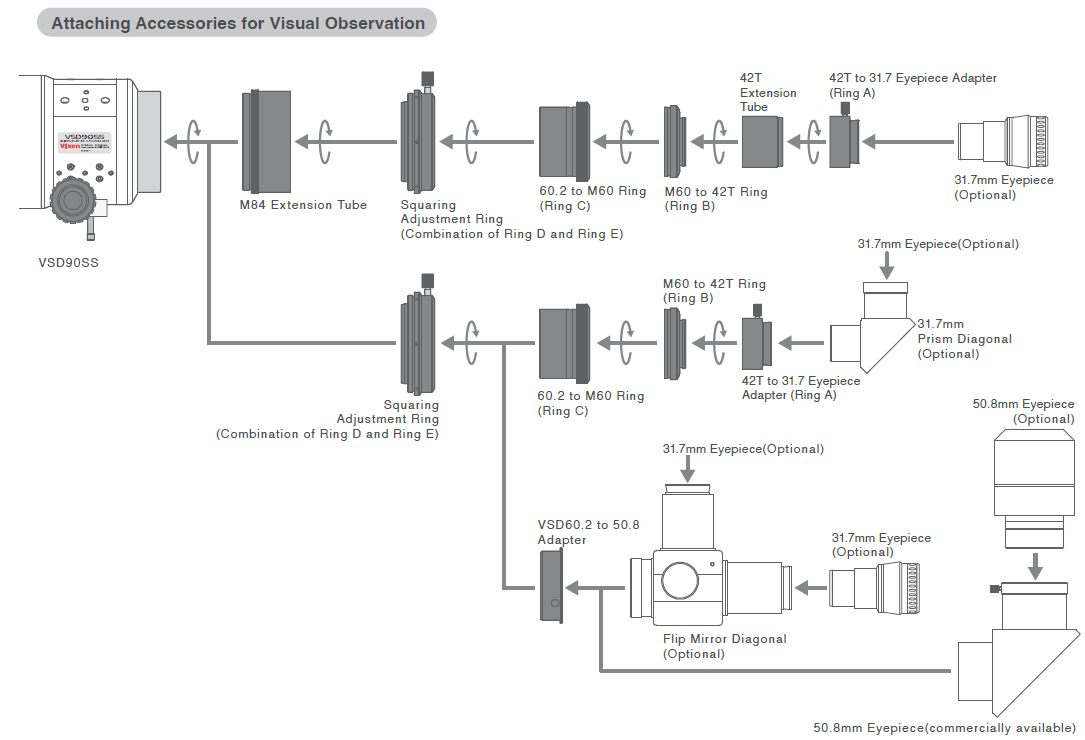
The VSD90SS is equipped with a large 87.5 mm focuser that fully utilizes its generously illuminated 60 mm image circle. Compatible with a wide variety of accessories, the focuser offers outstanding versatility for everything from astrophotography with large-format and 35 mm full-frame cameras to visual observation.
-
Precision Drawtube Lock Lever
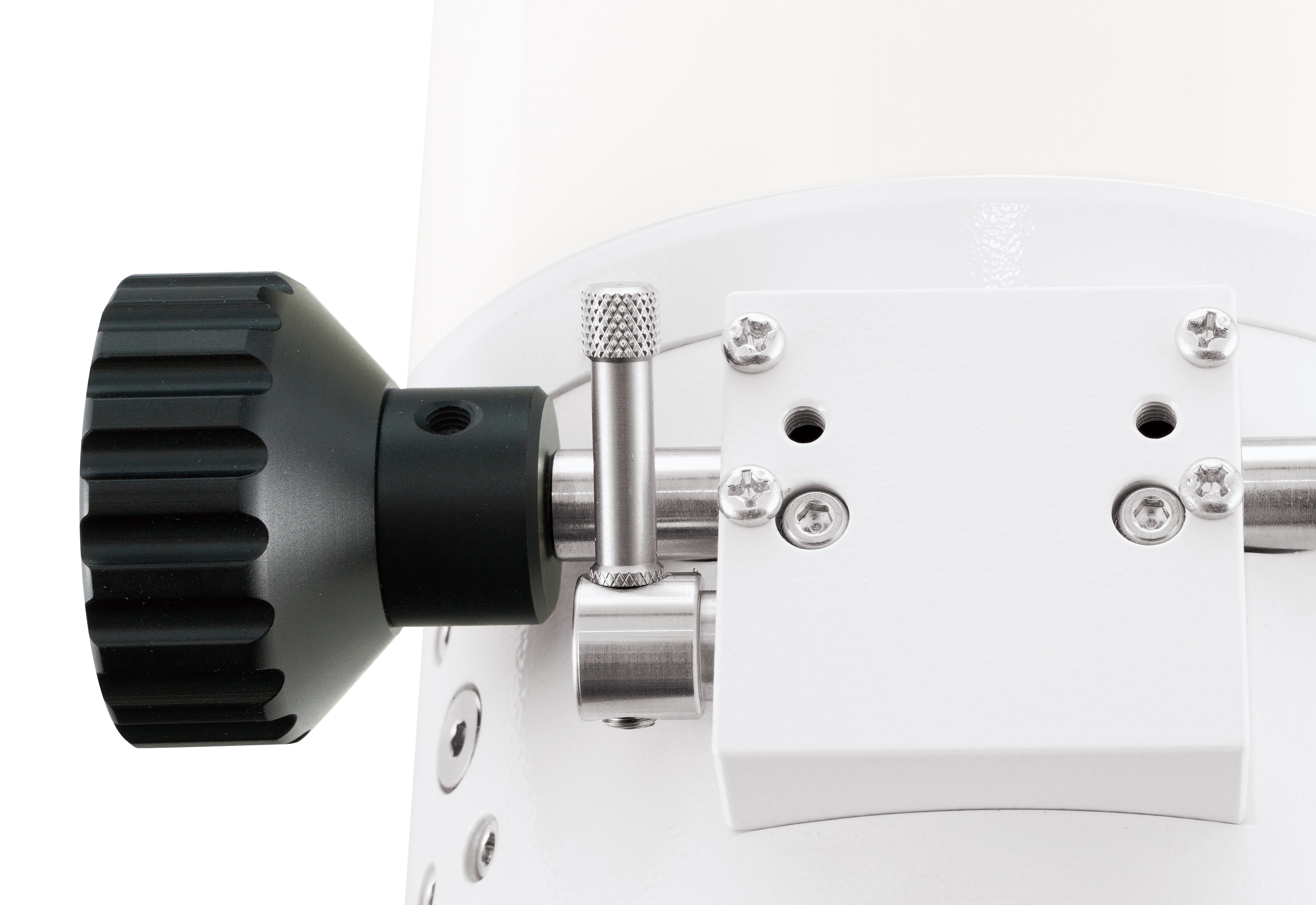
The focuser drawtube is equipped with a lock lever that securely holds the drawtube in place, even when heavy imaging equipment such as a large-format camera or a CCD camera with a large sensor is attached. The lock lever locks the drawtube by clamping its rack gear, preventing focus shift or changes in image framing while the lock is being engaged.
-
Compatible with Motorized Focusers
For even finer focusing, an optional dual-speed focuser (sold separately) is available for the VSD90SS.
The telescope is also compatible with the ZWO EAF (Electronic Automatic Focuser) and other comparable electronic focusers, allowing automated focusing for astrophotography.
-
Short Optical Tube for Easy Transport and Storage
The VSD90SS optical tube has an overall length of 600 mm, which can be reduced to 476 mm by reversing the dew shield for storage. (The overall length can be further reduced to 402 mm by removing the rear accessories.)
Despite its high-performance optical system, the VSD90SS packs down to a remarkably compact size, making it easy to store, transport, and take to observing or imaging sites. -
A Comprehensive Range of Accessories for Visual Observation and Astrophotography
VSD Tube Ring 115S
A must item when mounting the optical tube on an equatorial platform.
Click here for details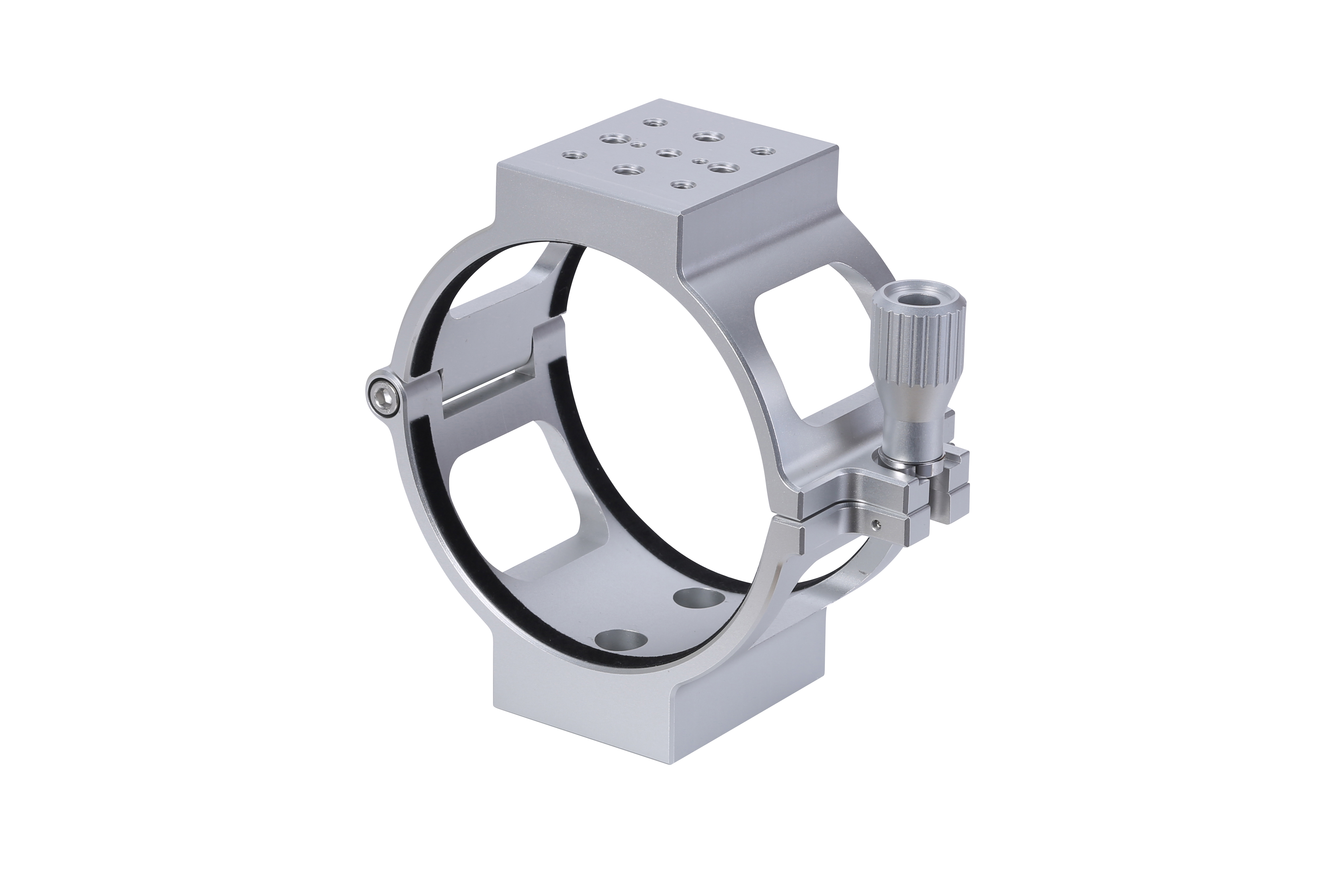
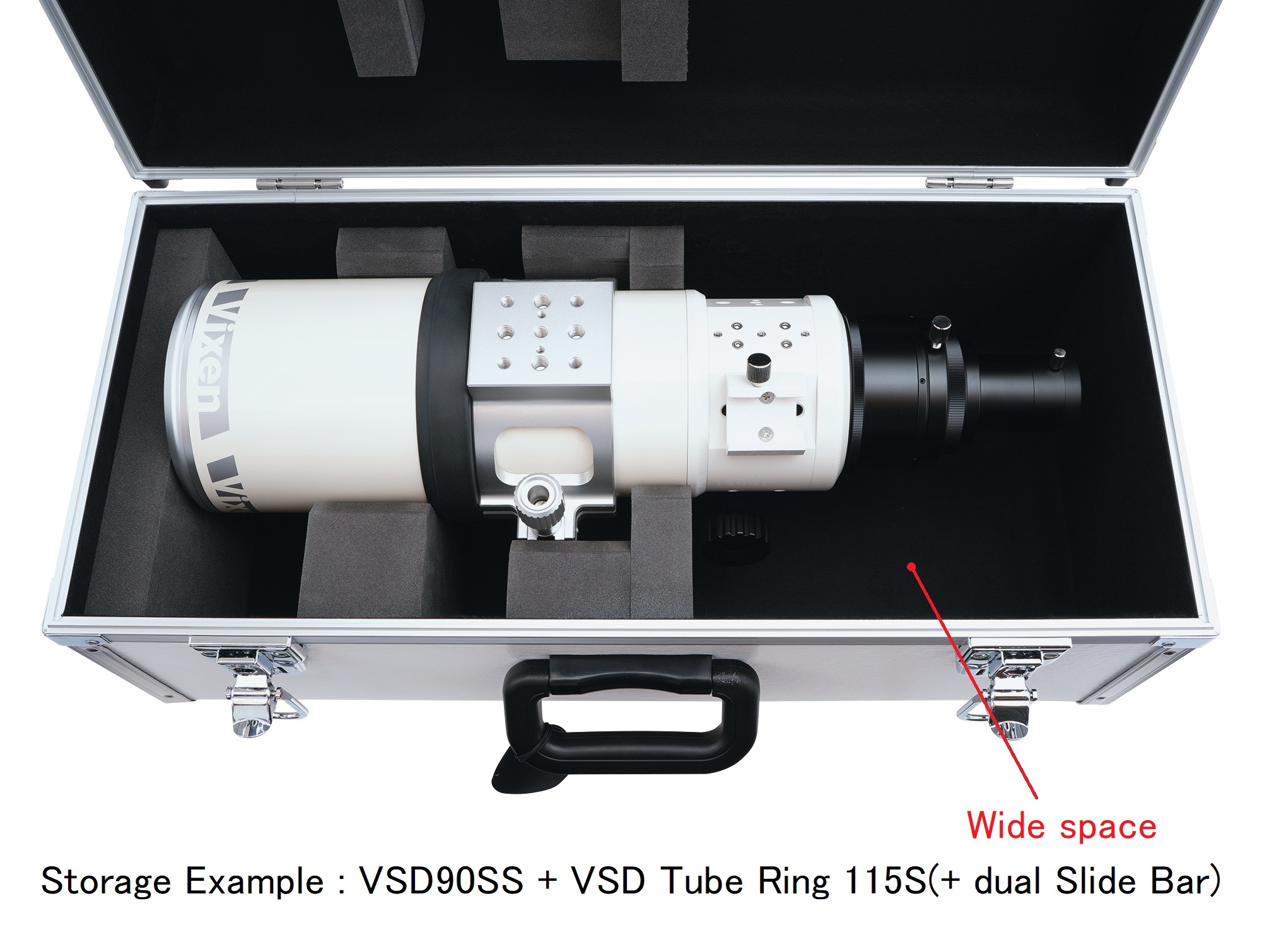
Storage Case for VSD90SS
It is an exclusive case for VSD90SS.Click here for details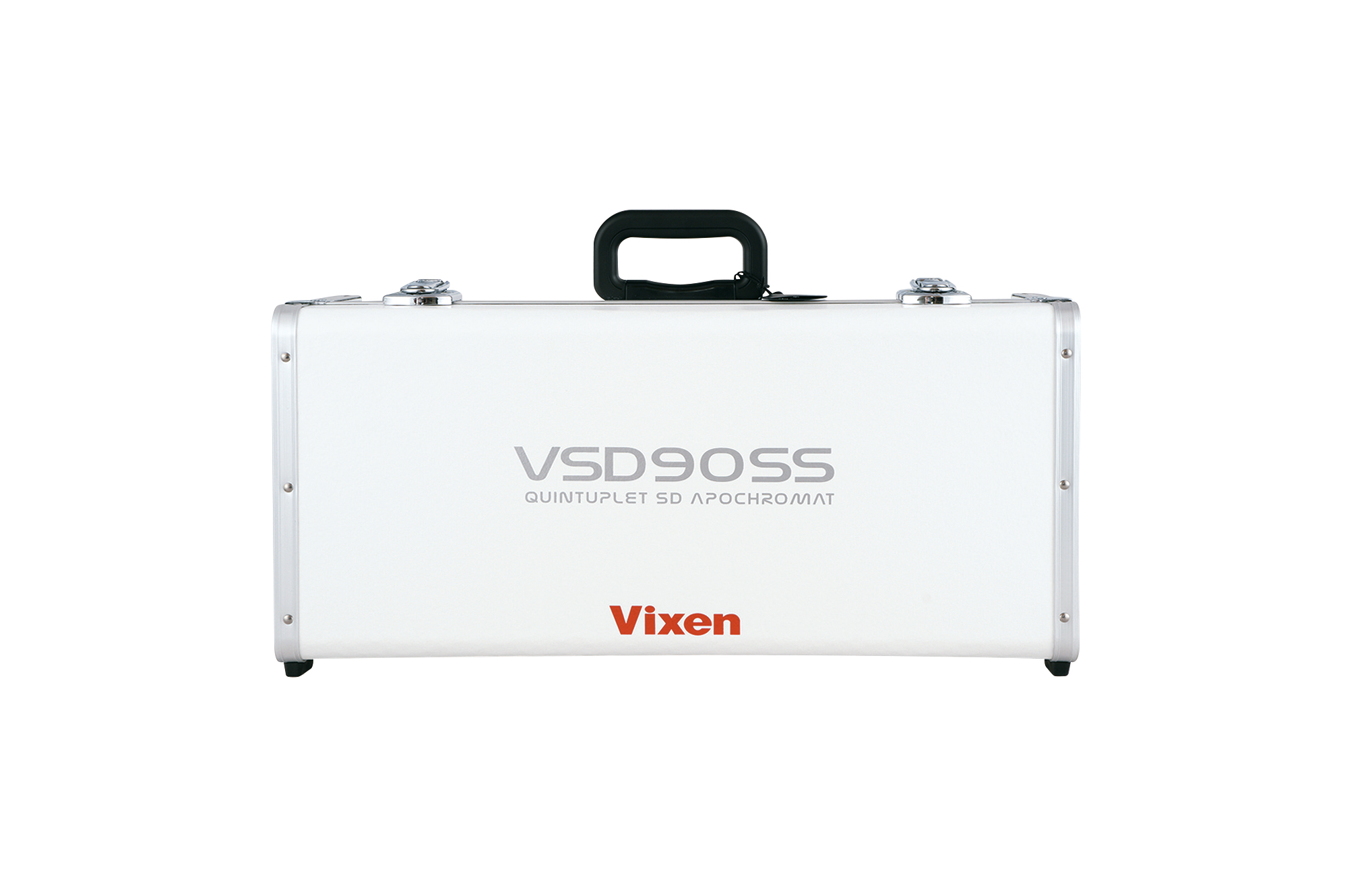
Specifications
VD90SS Optical Tube Assembly
-
Objective Design / Effective ApertureFive-group five-element SD Apochromat, AS coatings / 90mm
-
Focal Length (Focal Ratio)495mm (F5.5)
-
Resolving Power・Limiting Magnitude1.29 arc seconds・11.5
-
Light Gathering Power165X unaided eye
-
Image Circle60mmφ(Over 90% illumination at the round edge)
-
Optical Tube Size・Weight115mm dia. X 600mm long (476mm long for storage), 4.3kg
VD90SS Optical Tube Assembly
-
FinderscopeNot included, 7X50mm Finder with illuminated reticle, 50mm XY Finder bracket II sold separately
-
Focusing SystemRack-and-pinion
-
Accssory Threads / SizeThreads/ 84mm (pitch 1mm), 60mm (pitch 1.0mm), 42mm for T-ringPush-fit / 60.2mm, 50.8mm, and 31.7mm
-
Eyepiece (31.7mm)Not included, SLV series of eyepieces sold separately
-
Plates and/or Tube RingsNot included, VSD Tube Ring 115S, Dual Slide Bar sold separately
-
Provided AccessoriesVSD60.2 to 50.8 Adapter, 2mm and 1.5mm Allen wrenches
VD90SS Optical Tube Assembly
-
PhotographyEyepiece Projection, Prime Focus, and Aforcal Imaging with a smartphone are possible *1, *2
-
Solar ObservationUsing Sun projection screen Set B sold separately (Short-time observing is recommendable)*2
-
*1: An optional camera adapter or such is needed also.*2: An eyepiece is needed also.